

By Ben Morgan and FOX23.com News Staff
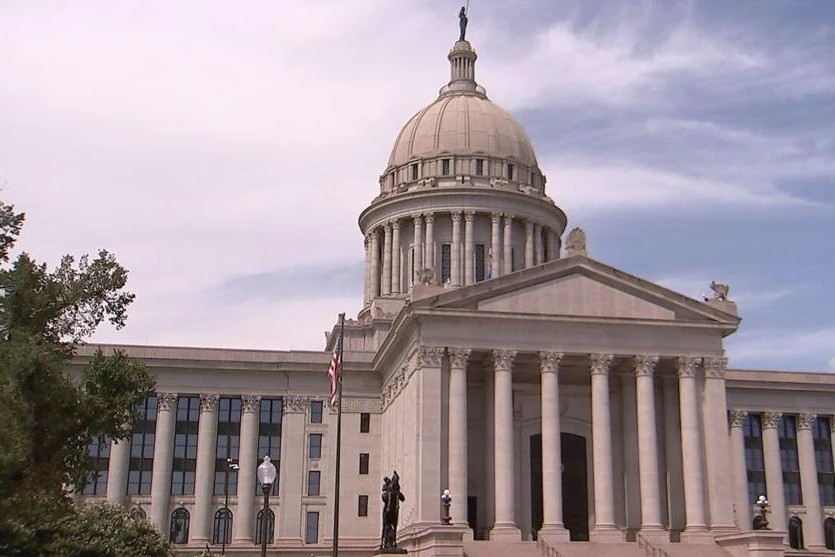
OKLAHOMA CITY — Oklahoma State Auditor and Inspector Cindy Byrd released her audit of the Oklahoma State Department of Education (OSDE), stating no evidence of wrongdoing was found but said several administrative issues were identified during the audit.
The audit was requested by Oklahoma Governor Kevin Stitt.
The audited period was set between July 1, 2020 and June 30, 2021.
“We found no evidence of wrongdoing, but we did identify issues that should concern both taxpayers and lawmakers,” said Byrd. “Of the $7.6 billion spent annually on public education, just 0.21% is available for discretionary spending at SDE. The vast majority of the money is controlled by local school districts, which is where any significant fraud, waste and abuse would likely occur. SDE primarily functions as a clearinghouse for distributing funds.”
In her official audit, Byrd outlined four major administrative issues that were observed when looking at Oklahoma’s public education system during the audited time period.
The first problem Byrd identified was the lack of proper oversight for the Oklahoma Cost Accounting System (OCAS), which is a coding system that categorizes and tracks the expenditures of school districts.
All data submitted to OCAS is uploaded directly by the school district itself, leading the audit to conclude the submitted data’s accuracy is based on the “honor system” and limits the system’s ability to work as an oversight tool.
According to the audit, it’s the responsibility of individual school districts and school boards to oversee the financial transparency and accountability in their own district.
The second issue raised by Byrd was the lack of regular meetings held by the Office of Educational Quality and Accountability (OEQA).
The Oklahoma State Secretary of Education is required by law to oversee meetings of the OEQA so they can properly analyze education spending and school finance, including administrative spending.
The audit claims OEQA “failed to meet regularly and failed to fully comply with these requirements.”
OEQA has the ability to review the expenditures of any school district that exceeds the 5% administrative expense cap, but the audit states none of the 23 schools who exceeded the cap during the audit period had their expenditures reviewed.
The third issue Byrd mentioned was the line-itemed appropriations given by legislators to a certain vendor whose curriculum was supposed to help students learn reading and math.
Appropriations were line-itemed directly to this vendor so the purchases didn’t have to go through a competitive bidding process. The audit states the curriculum produced by the vendor was never formally reviewed against Oklahoma standards.
According to the audit, the contracts between Oklahoma’s school districts and the vendor during the audit period added up to around $13 million.
The fourth and final main item mentioned by Byrd related to issues surrounding the Reading Sufficiency Act.
During the audit period, $11 million was allocated by legislators for the Reading Sufficiency Act, which was meant to support Oklahoma students with gaining vital reading skills by the end of third grade.
However, these funds were given to school districts on a per-pupil basis, meaning school districts with a small amount of students received barely any funding from the act.
In total, the audit said 11 school districts received less than $370 from the act. Four of those school districts received less than $100 and one school district received only $12.
Byrd said, “Legislators never built a framework to measure the success of these programs. Did taxpayers get an appropriate return-on-investment for their $11 million? Did more kids learn how to read? No one knows—and that’s the problem. Taxpayers deserve a functional system that monitors spending and provides adequate oversight to catch any problems. Responsible money management is a prerequisite for good outcomes in education.”
To read the full OSDE audit report, click here.