

By Paige Orr, Fox23 News
Oklahoma could lose nearly a quarter of a billion dollars in SNAP funding if the state can’t fix a critical error rate problem in the next eight months. Now, food banks and advocacy groups are asking Washington for more time.
The federal government tracks how often Oklahoma makes mistakes when calculating SNAP benefit amounts for eligible families. These aren’t fraud cases, they’re administrative processing errors in a complex system.
Right now, Oklahoma’s payment error rate sits at nearly 11%. Under new federal law passed in the “One Big Beautiful Bill” last summer, the state needs to get that number below 6% by Sept. 30, or taxpayers will be on the hook for around $250 million a year starting in October 2027.
“Part of the big, beautiful bill is that if the state doesn’t do a good enough job in reducing the amount of errors, the state has to start sharing in the actual cost of the program, which could be several hundred million dollars,” said Sen. Lonnie Paxton, Senate Pro Tempore. “Right now we’re at over 10%. We have to get it below 6% or that’s gonna cost us a lot of money.”
Jessica Dietrich, policy director at Hunger Free Oklahoma, explained what these error rates actually measure.
“SNAP payment error rates are a way to measure if we are getting the exact right amount of benefits to the folks that qualify for SNAP,” Dietrich said. “So that can mean sometimes there’s an error in processing the exact amount a family should get.”
That’s a nearly five percentage point drop the state needs to achieve in less than eight months. Anti-hunger advocates say they need more time.
Jeff Marlow, CEO of the Food Bank of Eastern Oklahoma, said he and other food bank leaders will be lobbying Congress next month.
“Myself and Stacy, the CEO in Oklahoma City at Regional, we’re gonna be in DC in March, 1st of March, and we’re gonna be talking to our Oklahoma legislators,” Marlow said. “And this will be one of the topics and hopefully we’re able to make some noise and we can get some of that grace to allow a longer time to get our error ratings down.”
Dietrich echoed that sentiment, saying the timeline is unrealistic.
“We’re also advocating at the state and federal levels to make sure the state has time to make these adjustments,” she said. “This is being implemented really quickly following the passage of HR one last summer, and we would like to see the federal government push out the implementation of this cost share at least a year, maybe up to three years further out than what is planned right now.”
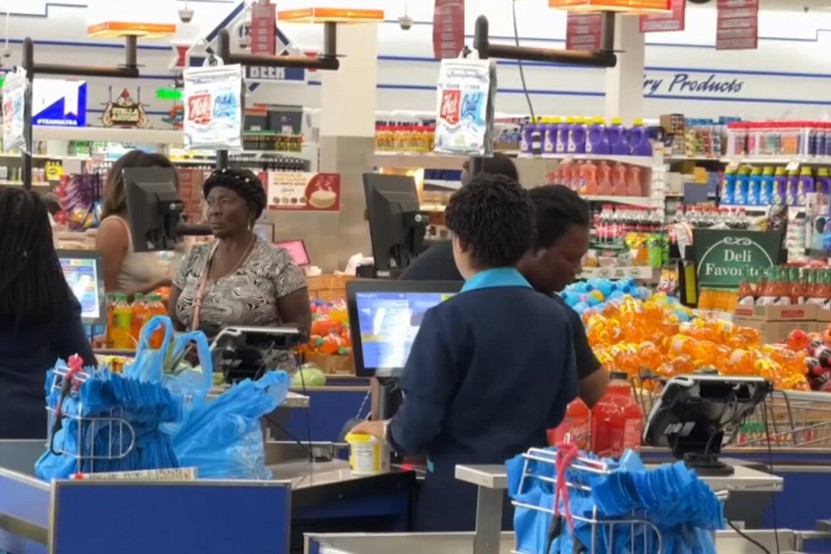
If the state ends up having to pay $250 million a year for SNAP benefits, the impact would ripple across Oklahoma’s 77 counties. More than 680,000 Oklahomans currently rely on SNAP benefits.
“If all of a sudden there’s 248 million that the state has to fund or not, and if it’s not funded, that is where we would see the effect,” Marlow said. “The families that need that SNAP assistance wouldn’t have the full amount. And that’s where the food banks would see the strain.”
Oklahoma has already seen a preview of this struggle. During a brief SNAP suspension last November, Tulsa nonprofit Food on the Move reported serving nearly 2,000 additional families in a single month. Marlow said while food banks stepped up then, a permanent cut would be unsustainable.
“We saw it during the government shutdown. We were able to respond between the two food banks and our partners and we did a really good job of it,” he said. “But that’s probably not a sustainable model.”
State Auditor Cindy Byrd said her office is ready to help identify where the system is breaking down, but she said she is currently barred from intervening unless DHS formally invites her team in.
According to Hunger Free Oklahoma, solutions include better staff training, improved data systems and simplified verification requirements. The state agency in charge of SNAP is already working with consultants to retrain staff and reduce calculation errors.
DHS leaders told lawmakers this week they have until Sept. 30 to get the numbers down before the federal cost-sharing begins.