


By Bailey Coyle, Fox23 News
TULSA, Okla. — A legendary piece of U.S. military history could soon become the newest landmark welcoming visitors to the Tulsa Air and Space Museum.
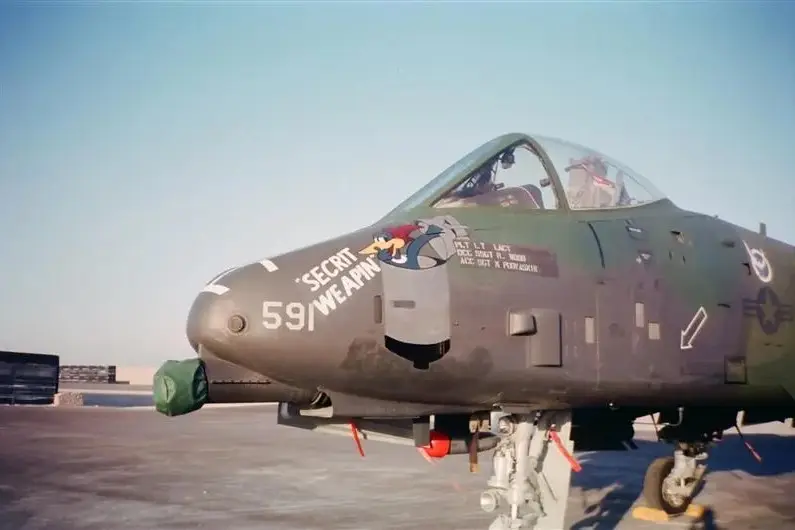
The museum is working to bring a combat-tested A-10 Thunderbolt II, better known as the A-10 Warthog, to Tulsa where it would be placed on permanent display at the museum’s front entrance.
One of the most recognizable aircraft in U.S. military history, the A-10 is known for its distinctive design, powerful cannon, and critical role in close air support missions.
Museum leaders said the aircraft will serve a much larger purpose than simply being on display.
Once the Warthog arrives in Tulsa, it will become part of the museum’s educational mission serving as a hands-on learning tool for students across northeastern Oklahoma.
Executive Director Tonya Blansett said the aircraft will help connect classroom lessons to real-world careers in science engineering, aviation, and aerospace.
“There’s so much going on — whether it’s drones, maintenance pilots, airport operations, tower control, the FAA, or the military,” Blansett said. “There is such an incredible workforce need. This aircraft is going to serve as an inspiration and a segue into that story so students can learn about jobs.”
The Tulsa Air and Space Museum serves roughly 35,000 students each year from kindergarten through college. Leaders said adding the A-10 will strengthen STEM education programs and spark interest in Oklahoma’s rapidly growing aviation industry.
The A-10 the museum acquired was built in 1978 and is a combat veteran of Operation Desert Storm, where it flew night missions. After retiring from combat duty, the aircraft spent the last 15 to 20 years at Sheppard Air Force Base in Wichita Falls, Texas, training Air Force aircraft mechanics.
Though the aircraft is no longer flyable and does not have engines, museum leaders said it is ready for its final mission: education and preservation.
The aircraft was acquired through a government surplus program for just $400, a process available to museums and state entities. The museum now officially owns the aircraft and is waiting for the U.S. Air Force to complete the demilitarization process, which involves hundreds of parts that can be reused on active aircraft.
Transporting an aircraft the size of an A-10 is a complex and expensive process. Once demilitarization is complete, professional crews will carefully remove the wings and possibly the tail before loading the aircraft onto two to three semi-trucks.
The trip from Wichita Falls to Tulsa will take about a day, followed by several more days to reassemble the aircraft at the museum’s entrance. Once installed, it will sit on a reinforced display pad and be secured to withstand high winds.
Because of the cost involved, the museum has launched a GoFundMe campaign and additional fundraising efforts to help cover transportation and reassembly expenses.
“We want to make sure we do this the right way, so we don’t damage anything,” Blansett said. “This is going to be a great addition. We’re calling her out ‘Gateway Guardian,’ the gateway into the museum.”
The museum has also launched Operation Warthog, encouraging community members to get involved Donors of $100 or more will receive an exclusive T-shirt and be invited to a private VIP event featuring A-10 pilots and crew members.
Research has also uncovered a special Oklahoma connection to the aircraft. One of its Desert Storm pilots, Ken Lacey, was born and raised in Oklahoma City and has shared photos and stories from the aircraft’s combat service.
Those stories will become part of a future exhibit detailing the aircraft’s journey from combat to classroom inspiration.
The museum hopes to have the A-10 on display by this summer, though the timeline has been impacted by delays related to the government shutdown.
Once complete, it will be one of the few A-10 Warthogs on public display in Oklahoma, and the only one in eastern Oklahoma.
Leaders said the aircraft will play a key role in highlighting Tulsa’s deep aviation roots and its future as a hub for aerospace maintenance, drones, and emerging technology.
With Oklahoma’s aviation industry now the second-largest and offering entry-level salaries around $75,000 a year, the museum leaders hope the Warthog will inspire students to see a future for themselves right here at home.
For more information on the GoFundMe campaign and to donate, click here.