


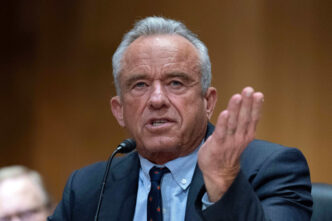
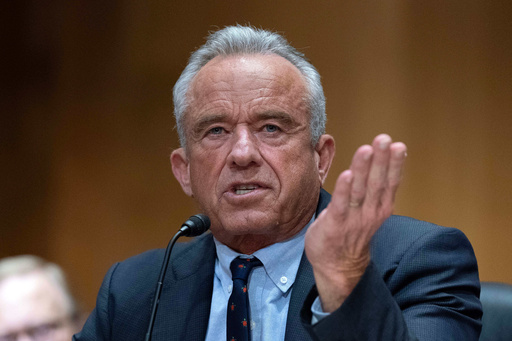
In a spate of recent appearances in Congress, Health Secretary Robert F. Kennedy Jr. recoiled almost every time a lawmaker referred to Medicaid cuts enacted in President Donald Trump’s big 2025 tax and spending bill.
Throughout the budget hearings, many Democrats raised concerns about how the cuts could affect rural hospitals and leave vulnerable Americans without health insurance. Kennedy frequently interrupted them to claim no cuts existed.
CLAIM: “There are no cuts to Medicaid," Kennedy said. "We are increasing Medicaid spending by 47% over the next 10 years. Increasing spending by 47%. How is that a cut? That is only a cut in Washington, D.C.”
THE FACTS: Medicaid analysts say Kennedy’s explanation is inaccurate political spin, and say an inevitable increase in spending due to factors like a changing population and rising health costs doesn't negate that there was a funding cut.
To help partly offset lost revenue from sweeping tax cuts and new spending, Trump's law last year enacted significant reforms to Medicaid, including new work requirements and eligibility changes, that are expected to cut the health care safety net program's spending by nearly $1 trillion over a decade.
Kennedy's argument is that Medicaid spending is projected to grow from year to year over the next 10 years — so there can't be a cut. His staff cited a February Congressional Budget Office report showing 47% growth over a 10-year period to back up his argument.
But experts explain that if the tax cuts and spending law hadn't passed, Medicaid spending would be growing more.
“This is an old, sort of tired argument that’s been used by conservatives to justify spending cuts by saying, well, if spending is still growing in nominal terms, somehow there wasn’t a cut,” said Edwin Park, a research professor at Georgetown University. “The federal government is spending nearly a trillion dollars less than it otherwise would have in the absence of the legislation.”
Sara Rosenbaum, a professor emerita at George Washington University’s school of public health, said Kennedy’s claims have been a common theme from Medicaid opponents throughout her 51-year career working on and studying the program.
“It’s absurd," Rosenbaum said. “They cut a trillion dollars.”
Republicans and the Trump administration have maintained that the Medicaid reforms were necessary to root out bad actors using the government's resources despite not being eligible. They've positioned the changes as part of their campaign to tackle health care fraud to increase affordability of the programs.
“To be clear, HHS is taking steps to ensure Medicaid serves those it is intended to support,” said Department of Health and Human Services spokesman Andrew Nixon. “These actions are not cuts — they are focused on addressing waste, fraud, and abuse to better position the program for those who rely on it.”
Park said the law's more burdensome enrollment requirements would certainly also affect eligible Americans, resulting in “many more uninsured people, and people going without needed care.”
___
Find AP Fact Checks here: https://apnews.com/APFactCheck.