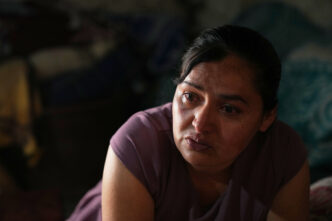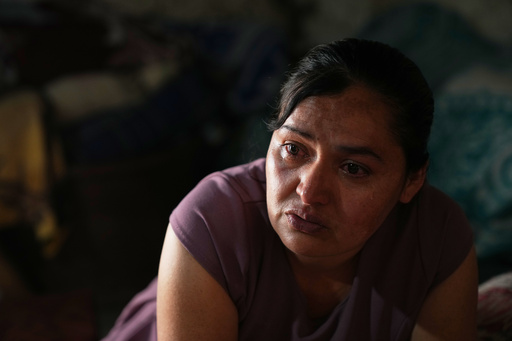


BUNIA, Congo (AP) — Every day for the past week, Aline Kasiwa has fed her sick mother, helped her drink and washed her clothes, all while fearing she could catch the Ebola virus as eastern Congo is plagued by one of the fastest-spreading outbreaks of the disease on record.
“She is the only family I have left. I cannot abandon her,” Kasiwa told The Associated Press, adding that she is too afraid to take her mother to the hospital where an infection could be confirmed. “These days we hear that many people are dying there, even nurses,” she said.
With no protective equipment beyond a cheap face mask, the 28-year-old in Bunia, a city at the heart of the outbreak, symbolizes the women in eastern Congo who are almost always the first caregiver, a role that health workers say is putting them at higher risk of contracting Ebola.
“It’s the woman who gives them a bath, it’s the woman who feeds them, and it’s the woman who’s there to wash the dirty clothes and everything else," said Dr. Furaha Elisabeth, director of the Karibuni Wa Maman gynecology and obstetrics clinic in Bunia.
Bundibugyo, the type of Ebola in this outbreak, has no approved treatment or vaccine. Even health workers have said they don’t have the masks, gloves and other gear to protect themselves.
That leaves some women with impossible choices, especially pregnant ones.
“When you see the way people die — even the nurses who treat us are dying — how can you not be afraid?” said Anny Ekyambo, a 32-year-old in Bunia who said she is too afraid to go to a clinic for checkups, even though she is five months pregnant.
The outbreak was identified weeks late because the rare Bundibugyo type was not tested for at first. Congolese authorities said Wednesday they have confirmed 363 cases, including 62 deaths, and more are suspected. Neighboring Uganda has reported 15 confirmed cases, including one death.
It is not clear how many women have been infected. But history shows that previous Ebola outbreaks have affected women more.
In the first recorded outbreak in the 1970s, women accounted for 56% of deaths, UN Women said. During the 2018-2020 outbreak in Congo, the deadliest in the country's history, women and girls made up about two-thirds of reported cases.
“We will certainly see the same pattern emerge in the current outbreak,” Sofia Calltorp, UN Women’s chief of humanitarian action, said in a statement. “Ebola transmission follows social realities. The virus spreads along the lines of care-giving, domestic labor, front-line health work and burial practices.”
Women in many eastern Congo communities are the ones preparing bodies for burial.
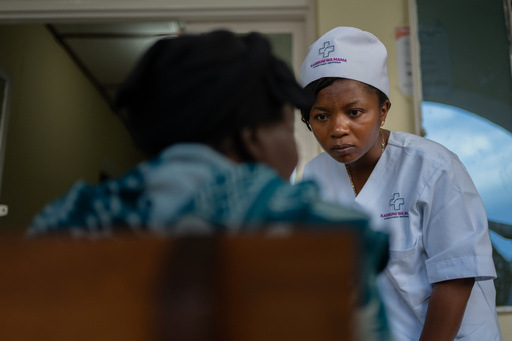
At the Karibuni wa Maman clinic, staff said they had received no personal protective equipment since the outbreak began, despite appeals to health authorities.
Patients showing symptoms are examined at the clinic before being referred to larger treatment centers, exposing doctors and nurses to potential infection with minimal safeguards.
Julienne Lusenge, president of Women’s Solidarity for Inclusive Peace and Development, the aid group running the clinic, said they have sought protective equipment from various partners, receiving only hand sanitizer and a few masks for nurses.
She said the equipment gap also endangers the women caring for sick relatives at home, with most of them unaware that Ebola may be the cause.
“During previous outbreaks, many women died because they were the ones nursing sick family members,” Lusenge said.
Despite new arrivals of aid and better-organized health facilities in recent days, Doctors Without Borders has said the virus continues to spread faster than the response.
“Nobody knows the true scale and severity of this outbreak," Dr. Alan Gonzalez, the medical charity's deputy director of operations, has said in a statement.
The outbreak is unfolding in unforgiving surroundings. Ituri province has poor road networks and underequipped health facilities more than 1,000 kilometers (620 miles) from Congo's capital, Kinshasa.
Attacks by the Allied Democratic Forces, a rebel group allied with the Islamic State group, and a coalition of ethnic militias also have hindered the response. Other cases have been reported in North Kivu and South Kivu provinces where the Rwanda-backed M23 rebel group controls key cities Goma and Bukavu.
Wariness of outsiders after decades of conflict in the remote region is another factor keeping people away from clinics and in women’s care.
Fears of contracting Ebola at a health center have become common.
Ekyambo, the pregnant woman in Bunia, said other women in the community share her fear of going to the clinic.
“I know that there are steps we must follow with the doctors to monitor the pregnancy and the baby, but we have no choice because this epidemic frightens us,” she said.
UN Women has said pregnant women could be more exposed by their frequent contact with health services.
Lusenga, however, warned that staying away from clinics could mean missing crucial prenatal and postnatal care consultations.
“We risk seeing a rise in prenatal and postnatal mortality, for both mothers and children,” she said.
___
Banchereau reported from Dakar, Senegal.
___
For more on Africa and development: https://apnews.com/hub/africa-pulse
The Associated Press receives financial support for global health and development coverage in Africa from the Gates Foundation. The AP is solely responsible for all content. Find AP’s standards for working with philanthropies, a list of supporters and funded coverage areas at AP.org.