

KYIV, Ukraine (AP) — U.S. President Donald Trump’s pledge to give Ukraine a license to produce Patriot air-defense systems could mark a major breakthrough for Kyiv, but experts and Ukrainian officials warn that turning the idea into real weapons would likely take years.
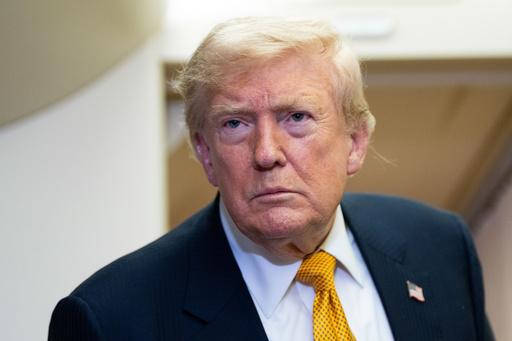
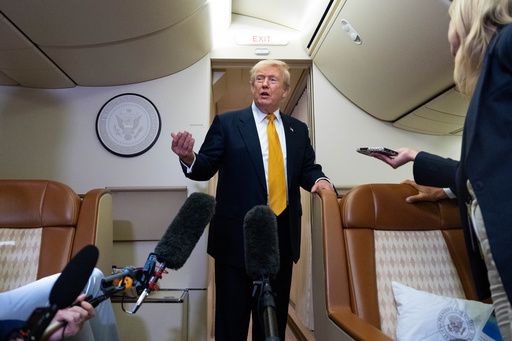
Speaking Wednesday alongside Ukrainian President Volodymyr Zelenskyy at a NATO summit in Ankara, Turkey, Trump said the United States would allow Ukraine to make the U.S.-designed systems that Kyiv has long sought to shield its cities and infrastructure from Russian missiles and drones.
“We’ll give them the right to make Patriots. We’ll show them how to do it,” Trump said. “I think they can produce them pretty quickly.”
But the statement left open a crucial question: What exactly would Ukraine be allowed to produce?
“America has recognized Ukraine as a country that is ready to do this,” Zelenskyy told reporters Thursday, adding that Ukrainian and U.S. diplomats and defense officials must now work “without pauses” to finalize the licensing arrangements.
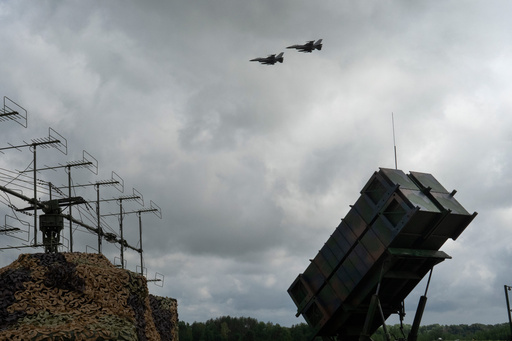
Patriot interceptor missiles, which are fired to shoot down incoming missiles, drones and aircraft, are produced by U.S. defense contractors Lockheed Martin and Raytheon, part of RTX.
A production license would not automatically allow Ukraine to manufacture complete Patriot batteries — including launchers, radar systems, command posts and missiles — from scratch. It could instead cover narrower parts of the system, such as interceptor missiles, final assembly from imported component kits or production of selected components.
Serhii Beskrestnov, an adviser to Ukraine’s defense minister, said a U.S. license would typically come with technical documentation, training for specialists, supplier contacts and foreign consultants to help launch manufacturing.
Other experts say the first step would likely be more limited than full domestic production.
Anatolii Khrapchynskyi, development director of the Fly Group Ukraine defense company, said Trump’s wording was ambiguous because he referred broadly to producing “Patriots,” without specifying whether he meant missiles, launchers, radar systems, command centers or components.
Missile production alone involves a vast supply chain, Khrapchynskyi said, with hundreds of companies making parts such as control surfaces, engines, guidance systems and communications equipment.
The Trump administration has not offered details about the Ukraine license, but an administration official said the U.S. is significantly accelerating and expanding Patriot production to meet growing demand and is forming industrial partnerships with allies and partners globally to deliver Patriots. The official spoke on condition of anonymity because they were not authorized to speak publicly.
Any additional Patriot systems would enter a war that has shown how quickly weapons production can expand when a country receives designs, technical support and access to components. Ukraine has become a leader in the manufacture of cheap, expendable drone systems. Russia has scaled up domestic production of Iranian-designed Shahed-type attack drones, known in Russia as Gerans, at a factory in Tatarstan.
But experts say Patriot interceptors are far more complex, requiring precision guidance, advanced radar technology, solid-fuel rocket motors, military-grade electronics and strict certification standards.
Yehor Chernev, deputy chairman of Ukraine’s parliamentary committee on national security, defense and intelligence, said the legal and bureaucratic process could be launched within months, but implementing production would take years.
Even if Ukraine received complete component kits from abroad, Chernev said, it would likely need at least 18 to 24 months to launch its first pilot production line, followed by more time to complete the first weapons.
The PAC-3 missile, designed to intercept and destroy ballistic missiles, is among the most sophisticated parts of the Patriot family. Producing a PAC-3 MSE missile in the United States takes about 24 months, and producing its solid-fuel rocket motor requires around 30 months, he said.
Chernev said some technology, especially the missile’s active radar seeker, is so sensitive that Washington would be unlikely to transfer full documentation for Ukraine to manufacture them from scratch. That means Ukraine might have to import some of the most complex components and focus first on assembly, integration or less sensitive parts of the supply chain.
Dr. Thomas Withington, an analyst specializing in electronic warfare, radar and military communications at the Royal United Services Institute, said expectations should be managed.
Ukraine’s existing defense industry could help, Withington said, but the country would still need time to set up facilities, train workers and secure the necessary supply chains.
“This is not going to be a fix for the air-defense threats Ukraine is going to face tomorrow.”
The United States has allowed Patriot-related production abroad before, and experts say those examples show that licensed production is possible but slow.
Japan has produced Patriot missiles under license for decades. Mitsubishi Heavy Industries has assembled PAC-3 missiles under a licensed agreement with Lockheed Martin, and Japan later loosened its postwar arms export restrictions to allow the sale of U.S.-designed Patriot missiles back to the United States — a move that could indirectly help replenish stocks used to support Ukraine.
Germany offers a more recent example. Raytheon and MBDA Deutschland announced in 2022 a plan to produce Patriot GEM-T missiles in Germany. A major NATO procurement contract followed in 2024 for up to 1,000 missiles, and a new production facility in Schrobenhausen is expected to play a role in supplying Ukraine and replenishing European inventories.
But Ukraine would face an additional challenge that Japan and Germany did not: Russian strikes.
Khrapchynskyi said any facility helping Ukraine defend its airspace would become a priority target for Moscow. Production would have to be placed in protected locations, potentially underground or inside shelters, he said.
That makes the license more of a long-term strategic step than an immediate battlefield solution. If implemented, it could help Ukraine become a future producer of air-defense weapons and reduce dependence on allies whose own stockpiles are under strain.
“It would not solve the current missile shortage in 2026,” he said, “but it would lay the foundation for Ukraine to become one of Europe’s leading producers of air-defense systems in the future.”
___
Associated Press journalists Volodymyr Yurchuk in Kyiv, Ukraine; Mari Yamaguchi in Tokyo; Stefanie Dazio in Berlin; and Michelle L. Price in Washington contributed to this report.