

By Rick Maranon, FOX23.com News Staff
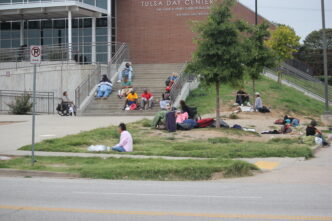
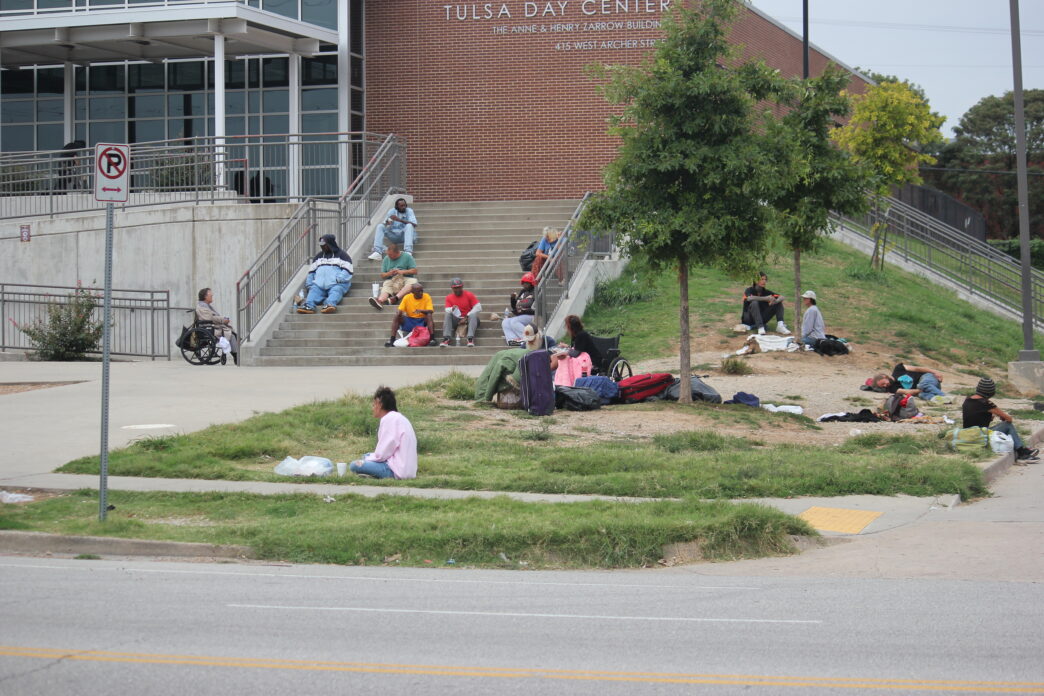
TULSA, Okla. — The state of Oklahoma is demanding the City of Tulsa cover more than $523,000 in costs associated with last year’s state-led operation to clear homeless encampments, setting up a dispute between Governor Kevin Stitt’s administration and Tulsa Mayor Monroe Nichols over who should pay for the cleanup.
In an Aug. 10 letter sent to Tulsa Police Chief Dennis Larsen, Oklahoma Chief Operating Officer David Ostrowe said the state spent $523,873.90 cleaning up homeless encampments within the Tulsa city limits during Operation SAFE.
View the letter here.
Ostrowe said the state believes Tulsa should be responsible for those costs and warned that the state plans to seek legislation during the next legislative session allowing it to recover costs associated with past, present and future cleanup operations.
“The State has repeatedly stepped in to remove dangerous and unsanitary encampments, dispose of abandoned property and waste, restore public areas and address conditions that Tulsa has allowed to persist,” Ostrowe wrote. “Each time Tulsa refuses to act, the financial burden is shifted from Tulsa to taxpayers across all 77 counties. The arrangement cannot continue.”
The dispute stems from Operation SAFE, which Stitt ordered nearly a year ago in response to homeless encampments in and around Tulsa.
At the time, Stitt said business owners had asked the state to intervene and that the Oklahoma Highway Patrol and Oklahoma Department of Transportation had launched a coordinated effort to clear encampments.
“We’re not going to allow you to break the law and harm all the businesses,” Stitt said at the time. “We’re going to make sure you get the help you need if you want the help. If not, you’re going to have to go somewhere else. That’s what we’re saying in Tulsa.”
Ostrowe’s letter also criticizes the city and Tulsa Police Department over their handling of homeless encampments and says the state expects Tulsa police to enforce existing laws.
“This letter places the City of Tulsa Police Department on notice that the State expects the Department to enforce the law and address unlawful encampments within its jurisdiction,” Ostrowe wrote.
Ostrowe said if Tulsa does not fulfill those responsibilities, the state will “pursue every available avenue” to make the city bear the resulting costs.
He also said the Stitt administration plans to ask lawmakers during the next legislative session to authorize the recovery of “the entire cost of any past, present, or future cleanup measures undertaken by the State” when the state believes those measures become necessary because of a Tulsa policy, directive or practice.
Nichols pushed back on the state’s demand, saying Operation SAFE was initiated by Stitt and involved the state clearing encampments from state property using state resources.
Nichols also questioned whether Oklahoma City and Norman received similar demands from the state.
“It also seems odd that Tulsa was singled out in this reimbursement process,” Nichols said.
The mayor said Tulsa already spends more than $300,000 annually to dedicate two crews to cleaning about 300 miles of state highways.
He said the city has spent nearly $2 million on that work since 2021.
“If the State’s position is that governments should simply bill one another for work they believe the other should have done, then we are certainly capable of having that conversation and we can start by sending the State the bill for the work the City is already doing on its property,” Nichols said.
Nichols also said the city has spent significant resources responding to the aftermath of Operation SAFE, including helping people who were displaced during the operation.
According to Nichols, the city’s Safe Move Tulsa initiative has moved nearly 600 people off the streets, closed 10 encampments, removed 190 tons of trash and debris and helped 40 animals receive housing services.
Nichols has previously said Operation SAFE left some people without medications, identification or a place to go after encampments were cleared.
Stitt’s office defended the state’s position in a statement to FOX23:
“The state has shielded the municipality from the costs of providing mental health and social services to those who accepted help,. The least the municipality can do is keep the streets clean and safe.”
State Rep. Melissa Provenzano, a Tulsa Democrat and incoming House minority leader, questioned the state’s attempt to charge Tulsa for work the city did not request.
“I don’t know what others do when someone sends them a bill for services they didn’t ask for nor did they agree to, but it is curious for the state to do so for services performed on state property, which they are responsible for maintaining,” Provenzano said.
Provenzano also criticized the execution of Operation SAFE, saying the state did not adequately coordinate with local organizations to connect people experiencing homelessness with services.
“This effort created a headache for residents and we saw our homeless population appear in multiple new spots across Tulsa,” Provenzano said.
A separate state law set to take effect in November will provide a process for some property owners to recover costs when they believe local governments have failed to address certain homelessness-related nuisances.
Under the law, qualifying property owners can notify a city or county about an alleged nuisance. If the local government does not take action within 30 days, a property owner could sue to recover certain costs associated with protecting or repairing the property.
Any award would be capped at the amount the property owner paid in property taxes during the previous year.
The legislation faced bipartisan opposition.
State Sen. Julie Daniels, a Bartlesville Republican and Senate majority leader, defended efforts to enforce existing laws.
“You start sending a signal that we, to the best of our ability, are going to enforce the laws on the books to improve things,” Daniels said. “I think that’s what the property owners are looking for.”
State Sen. Dave Rader, a Tulsa Republican, opposed the approach.
“Everybody here is from municipalities that have issues, but we’re not going there saying you have to behave such-and-such way,” Rader said. “It’s not a numbers deal. It’s an overreach deal. This is not how government is supposed to work.”
Several questions remain about the state’s attempt to recover the $523,873.90 from Tulsa.
Stitt will leave office because of term limits, raising questions about whether the next administration will continue pursuing the money and whether Ostrowe will remain the state’s chief operating officer.
It also remains unclear which legislator would sponsor the legislation Ostrowe referenced, what mechanism the state would use to recover the money and whether Oklahoma City, Norman or other municipalities could face similar demands.
Another unanswered question is whether Tulsa’s current Safe Move Tulsa program will satisfy state officials or whether another state-led cleanup operation could take place.
FOX23 will continue seeking answers about the state’s demand and what it could mean for Tulsa taxpayers.
READ TULSA MAYOR MONROE NICHOLS’ FULL RESPONSE TO THE OSTROWE LETTER:
“The State made a decision to conduct a large-scale cleanup of property that it owns and maintains. It is difficult to understand how the City of Tulsa then becomes financially responsible for that cleanup simply because the State wants to be reimbursed for their own expenses. It also seems odd that Tulsa was singled out in this reimbursement process.
“It should be of note that the City of Tulsa already dedicates significant resources to maintaining State property. Tulsa spends just over $300,000 yearly, which is almost $2 million spent since 2021, to dedicate two crews to cleaning approximately 300 miles of State highways. If the State’s position is that governments should simply bill one another for work they believe the other should have done, then we are certainly capable of having that conversation – and we can start by sending the State the bill for the work the City is already doing on its property.
“We could also begin accounting for the significant time and resources the City has spent responding to the consequences of the State’s operation, including helping locate individuals who were displaced, reconnecting them with medications and identification, and responding to the impacts in our parks and neighborhoods after people were displaced without a place to go.
“This should not be a competition over who can send the other government the largest bill. The City and the State should be working together to address homelessness and public safety, not shifting costs onto one another. Tulsa will continue to do its part, especially through proven and effective programs like Safe Move Tulsa, our strategy to end street homelessness that has already moved nearly 600 people out of homelessness, closed 10 encampments, provided housing services for 40 animals, and cleaned nearly 190 tons of trash and debris in less than a year.”