

RIO DE JANEIRO (AP) — Brazil extended voting in Sunday’s polarizing presidential runoff between incumbent President Luiz Inácio Lula da Silva and Flávio Bolsonaro, after both candidates requested the extension based on issues with voting in their respective strongholds.
The decision caused confusion at polling stations in a country with a usually speedy electronic voting system and where the final result is expected to be close this election.
It also set the stage for possible legal challenges no matter who wins. Lula’s camp said it was already looking into possible legal maneuvers because of “interference in the electoral process.” Bolsonaro’s campaign had yet to comment.
The contest will determine whether the U.S. will significantly expand its growing influence in Latin America. A win for Bolsonaro would signify a pivot to the right by Latin America’s most populous country and its largest economy, in a year when Trump allies have scored victories in Chile, Peru and Colombia. A victory for Lula would leave Brazil and Mexico with left-of-center leaders.
Polls showed the two candidates, who need more than 50% of the vote to become Brazil’s next leader in January, in a neck-and-neck race. The election pits the left-of-center veteran politician Lula against Bolsonaro, an ally of U.S. President Donald Trump and the son of imprisoned former President Jair Bolsonaro.
Shortly after polls closed, Brazilian Supreme Court justice Cristiano Zanin ruled to extend voting nationwide for two hours following requests from both candidates. Lula’s request came after issues in nine states with buses that provide transportation to polls in Sao Paulo and Salvador, two cities that tend to favor the incumbent. A state electoral judge ordered the arrest of the mobility secretary of the state capital, Salvador, Pablo Souza, in relation to the case after at least 75 public buses were prevented from leaving municipal garages Sunday.
Bolsonaro’s request was due to heavy rains in Brazil’s south, where he is favored.
The extension threatened to cause logistical problems with some polls likely having closed before they got the order to stay open.
In Brasilia, volunteers who oversaw the vote count at a school debated whether they needed to stay after the announcement to extend voting, but most left 15 to 20 minutes after polls closed and they had given count information to electoral authorities. At a polling station in Rio de Janeiro, the voting machines had already been switched off minutes after polls were set to close and couldn’t be turned back on.
Supreme Court Justice Zanin later clarified the decision is valid for wherever polls were still open.
The electoral mission for the Organization of American States said in a statement that it is monitoring reports of public transportation issues.
Bolsonaro bested Lula by more than 2.2 million votes in the first round of the election earlier this month. However, more than 33 million voters out of nearly 160 million did not turn out.
Bolsonaro and Lula have opposing ideological views on issues ranging from U.S.-Brazil relations and climate change to social welfare.
In many ways, Brazil’s runoff vote is another tight rematch between the country’s two polarized political forces that trigger passion as much as loathing. Four years ago, Lula beat Bolsonaro’s father by the narrowest margin since the country’s return to democracy in 1985.
Lula, who first governed Brazil between 2003 and 2010, has faced a tough reelection battle because of concerns about the cost of living and security. Bolsonaro made a tough-on-crime approach the cornerstone of his campaign and pledged to bring down food costs while Lula, trying to lure undecided voters, has invested in costly incentives.
Both have been hit by corruption suspicions involving family members and allies, with Bolsonaro implicated in a sprawling scandal rocking Brazil. Lula previously spent more than a year in prison on corruption convictions that were eventually annulled.
As Bolsonaro voted at a school in Rio de Janeiro, his supporters shouted “Lula, thief, your place is in prison” while Lula’s supporters chanted in his support.
“The time of real change has arrived,” Bolsonaro said. “Brazil can’t go on for another four years on its current trajectory.”
Lula voters turned out Sunday driven by his history of supporting marginalized people and working to lift Brazilians out of poverty.
“Lula is a man of the people and he knows what it’s like to be poor,” Luzia da Souza, who runs a bar in Rio de Janeiro, said. "I find it impossible not to vote for him.”
Anderson Falcão, a 43-year-old journalist in Brasilia, said he worried about Bolsonaro’s long-term political vision, which he called “exclusionary.”
“It’s a project that harms the less fortunate, harms the worker, women, the forest, the Amazon,” he said.
Bolsonaro voters, many of whom wore yellow and green Brazil jerseys in support of the senator, said they want change.
“Things are really expensive and taxes are too high,” Fabianne Borges Santoro, a 45-year-old physiotherapist in Rio de Janeiro, said. She added that she once voted for Lula’s party but now associates it with corruption.
Kelvin Gomes Pimental, a 28-year-old data analyst in Brasilia, voted for a third-party candidate in the first round, making his vote for Lula a decisive one in this election.
“It’s not even about Flávio himself. It’s also very much about the management of the other Bolsonaro government. He wanted to stage a coup,” he said. “These issues scare me a little.”
Diogo Furtado, a 35-year-old Uber driver in Rio de Janeiro, didn’t vote the first time because of his work, but said he'll vote blank on Sunday. He said that neither candidate convinced him.
“Brazil needs a new candidate,” Furtado said. “But unfortunately our country has become dominated by two names: Lula and Bolsonaro."
Lula criticized the U.S. president before Brazil's election, speaking about the risks of U.S. intervention in Brazilian elections after the Trump administration imposed high tariffs against Brazilian exports and classified drug-trafficking groups as foreign terrorist organizations. Experts say the moves may have been intended to make Lula look soft on crime.
Flávio Bolsonaro has touted his proximity to the White House and insisted that Brazil needs to strike better deals with the Trump administration, including in the rare minerals economy. Brazil estimates that its deposits hold up to 21 million tons, second only to China. He denies he's being helped by the U.S. government.
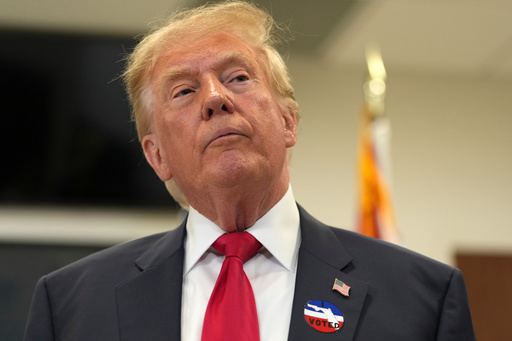
Trump said Sunday that he is watching the election but declined to endorse a candidate.
___
Savarese reported from Sao Paulo. Brigida reported from Brasilia.
___
Follow AP’s coverage of Latin America and the Caribbean at https://apnews.com/hub/latin-america