

By Devyn Lyon, FOX23 News
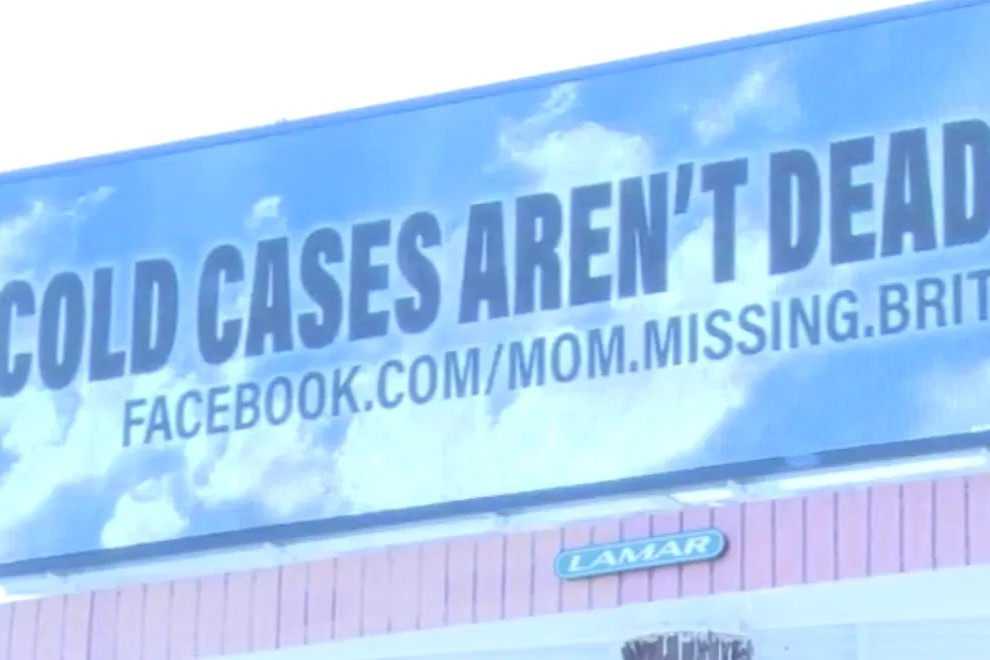
TULSA, Okla. — For 22 years, Dr. Maggie Zingman has searched for answers about who murdered her daughter, Brittany Phillips, in Tulsa.
Now, a new Oklahoma law is giving her and other families across the state a formal way to request another examination of their loved ones’ unsolved cases.
Senate Bill 1636 took effect November 1, requiring law enforcement agencies to review qualifying cold cases when eligible family members submit a written request.
Zingman joined advocates, families and state lawmakers outside the Tulsa Police Department on Thursday, November 5, to explain what the law changes and how families can use it.
“I’m the mother of Brittney Phillips, as many people know, who was killed 22 years ago. And it’s a cold case now, still at 22 years. But this really isn’t about my case this time,” Zingman told our news partners at FOX23. “It’s about all the cases across Oklahoma.”
Brittany Phillips was found murdered in her Tulsa apartment on September 30, 2004, just days before her 19th birthday.
Her killer has never been identified.
Zingman has spent more than two decades advocating for answers in her daughter’s case while connecting with other families facing similar circumstances.
She says some families have previously requested reviews of unsolved cases but were turned down without a formal process to challenge that decision.
The new law changes that by requiring agencies to respond to qualifying written requests.
“A cold case law is not about criticism. It’s about a fresh set of eyes,” Zingman said.
She explained that reviewing an older case could help investigators determine whether advances in forensic technology, additional witness interviews or another examination of existing evidence might uncover new leads.
What Senate Bill 1636 Changes
The legislation was authored by Sen. Carri Hicks, D-Oklahoma City, and Rep. Ross Ford, R-Broken Arrow. It passed unanimously in both chambers of the Oklahoma Legislature and was signed into law in May.
Ford, a former police officer, says the goal is to ensure unsolved cases continue receiving attention.
“May grow old, but our commitment to justice will never grow cold,” Ford said during Thursday’s press conference.
Under the new law, qualifying families can request a case-file review without first having to establish that investigators made mistakes or that new evidence exists.
The law requires:
- A written request: An eligible family member or other qualifying person submits a request to the law enforcement agency responsible for the case.
- A response within 30 days: The agency must acknowledge receiving the request in writing.
- A fresh review: The review must be conducted by someone who has not previously investigated that case.
- A conclusion generally within six months: The agency must determine whether further investigation is warranted. Extensions are allowed under certain circumstances, with written notice and an explanation.
- Communication with families: Investigators must provide periodic updates and meet with the requesting person to explain their findings.
The review must consider previous investigative steps, potential witness interviews, physical evidence, forensic testing and opportunities to update older investigative files.
The law does not guarantee that a case will be reopened or solved.
If investigators determine that further investigation is not warranted, another case-file review generally cannot take place for at least five years unless materially significant new evidence is discovered. The statute also addresses cases in which further investigation fails to identify a suspect.
The law does not prevent police from continuing investigative work.
You can read the full legislation by clicking here.
How Oklahoma Families can Request a Cold Case Review
For families with an unsolved violent crime involving a loved one, the process begins with a written request.
The law identifies eligible applicants as immediate family members, including spouses, parents, children, siblings, grandparents, grandchildren and certain stepfamily members. Law enforcement agencies may also recognize other qualifying individuals.
Families should contact the agency responsible for investigating their loved one’s case to determine where to submit their written request.
Zingman says families do not need a complicated legal document to get started.
“For once, the families have a very simple step. Ask,” she said.
She also encouraged families to communicate directly with the investigators responsible for their cases whenever possible.
Example: Maggie Zingman’s request to Tulsa Police
Zingman provided a copy of her November 2 written request addressed to the Tulsa Police Department Cold Case Unit.
In the letter, she identifies herself as Brittany Phillips’ mother, provides information about her daughter’s murder and formally requests a review under SB 1636.
She also explains that the request is not intended as criticism of Tulsa Police, but as an opportunity to examine the case using current investigative methods and available resources.
Families wanting to make a similar request can use the following sample, adapted from Zingman’s letter.
Sample Cold Case Review Request
[Date]
To: [Law Enforcement Agency / Cold Case Unit]
Subject: Request for Cold Case Review under Oklahoma SB 1636
My name is [Your Full Name], and I am the [Your Relationship] of [Victim’s Full Name].
My loved one’s case involves [Brief Description of the Crime], which occurred on or about [Date] in [City/County, Oklahoma].
The case remains unsolved.
Pursuant to Oklahoma Senate Bill 1636, codified at 21 O.S. 146, I am formally requesting a case-file review to determine whether further investigation may produce additional leads.
I respectfully request written acknowledgment of this application and updates as required under the law.
I also request the opportunity to meet with the reviewing agency to discuss the findings and whether further investigation is warranted.
Thank you for your attention to this request.
Sincerely,
[Your Full Name]
[Your Relationship to Victim]
[Your Phone Number]
[Your Email or Mailing Address]
[Case Number, if known]
This is an informational sample based on Zingman’s letter, not an official state form. Eligibility depends on the law’s definition of a qualifying cold case and applicant. Families should retain a copy of their request and a record of when it was received. For Tulsa cases, families can find information through the Tulsa Police Department’s Cold Case Unit, here.
The Oklahoma State Bureau of Investigation also provides an explanation of the law, including eligibility requirements and review deadlines.
Zingman Preparing to Submit her own Request
During Thursday’s interview, Zingman said she had already communicated with Tulsa Police Chief Dennis Brooks and planned to meet with him the following week.
She brought a prepared written request seeking a review of Brittany’s murder and said she might submit it before that meeting.
Zingman says she hopes the review process will help families better understand what has been investigated, what evidence remains available and whether additional investigative steps could be taken.
She also plans to continue holding Brittany’s Bridge meetings across Oklahoma to help other families understand their options and prepare requests.
More Cold Case Legislation Could be Coming
Although SB 1636 is now law, advocates and lawmakers say their work is not finished.
Zingman says they are pushing for additional legislation to establish a statewide cold case oversight and accountability structure.
Hicks and Ford have already pursued an interim legislative study examining a possible statewide Cold Case and Missing and Unidentified Persons Advisory and Accountability Board.
Such a board could help coordinate agencies, examine resource needs, improve communication with families and identify gaps in how unresolved cases are handled.
No such statewide board has been established under SB 1636.
For Zingman, the new review process represents another opportunity to keep attention on cases that have remained unsolved for years or even decades.