

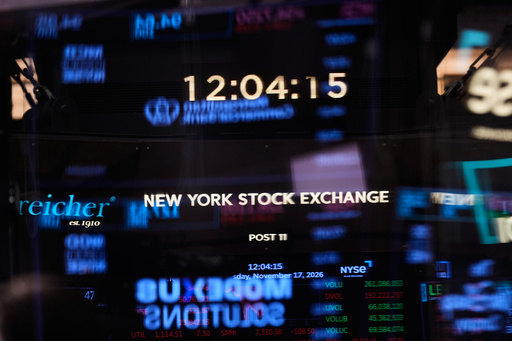
Anyone following Anthropic's plans to sell shares to the public starting Thursday is likely to come across terms that describe steps and components of an initial public offering. Here's a quick guide.
A company's first offering of stock to the public. It is the first time a company's value will be determined by a public market.
A formal offer to sell shares in the company. It also includes a business plan with details about the company's finances and operations. It is also known as an S-1, after the Securities and Exchange Commission form.
This describes the ticker symbol for the stock and the public exchange where it is being traded. For example, Apple is traded as “AAPL” on the Nasdaq and Macy's is traded as “M” on the New York Stock Exchange. Anthropic is listing on the Nasdaq under the symbol “ANT.”
An underwriter is a bank or other financial institution that acts as the intermediary between the company and investors. They purchase the stock being issued by the company in the IPO and sell it to the public. There are often several underwriters involved to share the risk. The lead underwriters for the Anthropic IPO are Goldman Sachs and Morgan Stanley.
The name for the presentations given by company executives and underwriters to potential investors, typically institutional investors, before the company issues its shares.
This is a provision that allows underwriters of an IPO to sell more shares than initially planned. It is meant to meet unexpectedly high demand or to help stabilize the stock price.
This is an estimated range for the price of the shares the company is offering provided before the stock is publicly traded. Investors place bids within that range before the listing price is determined. Anthropic set a price range of $70 to $78 per share before announcing Wednesday the price would be $83 per share in the offering.
This describes the broader process undertaken by the company and underwriters to determine the listing price for the stock. It attempts to balance demand for the stock with the potential supply of shares. The process typically takes longer when an IPO has high interest from potential investors.