

By Devyn Lyon, FOX23 News
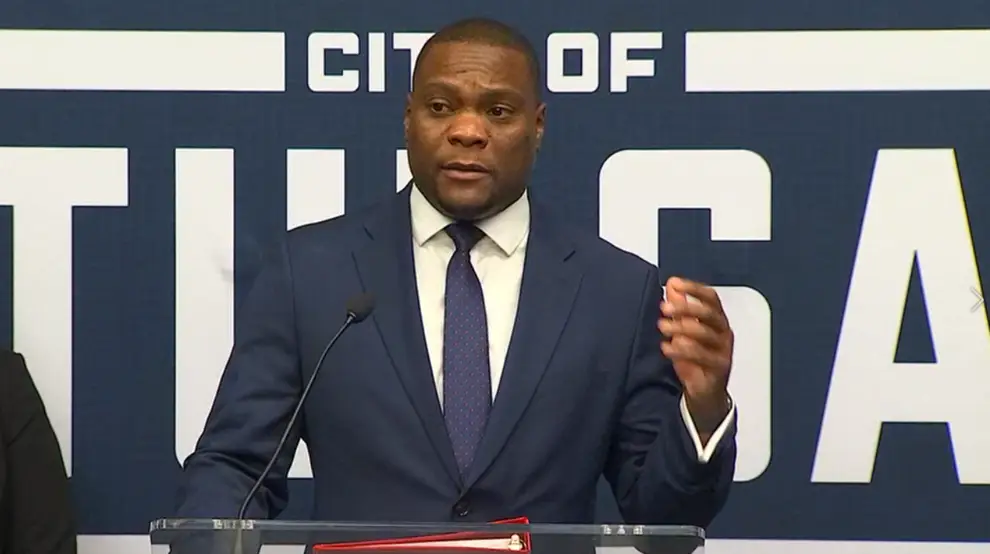
TULSA, Okla. — Tulsa Mayor Monroe Nichols highlighted billions of dollars in planned investments, thousands of announced jobs and an ambitious vision for downtown Tulsa during his State of the City address Thursday, while signaling that residents could be asked to weigh in on major development investments as early as next year.
Speaking at the Tulsa Regional Chamber’s State of the City event at the Arvest Convention Center on Nov. 19, Nichols described Tulsa as a city experiencing significant economic momentum.
“Let me put it to you bluntly. It means that we are kicking ass in Tulsa in an economic sense,” Nichols told the audience.
The mayor pointed to business expansions, improvements in public safety, efforts to address homelessness and new education partnerships as evidence that Tulsa is moving in the right direction.
But beyond the accomplishments Nichols celebrated, questions remain about how those investments will affect residents struggling with everyday expenses, how major redevelopment projects will be funded and what role voters will play in deciding the city’s future.
Nearly $1 billion in proposed downtown investment
One of the biggest developments highlighted in Nichols’ address was Project Nexus, a proposed investment approaching $1 billion that could significantly reshape downtown Tulsa.
“I believe we’re approaching one of the most consequential moments for downtown in our city’s history,” Nichols said.
In an interview with FOX23 following his speech, Nichols said the opportunity extends beyond city government.
“So we’re not just talking about the plans of city government or one mayor or one council,” Nichols said. “We’re actually talking about the corporate and philanthropic community working with the city to make the kind of investment downtown that we probably haven’t seen in several generations.”
Nichols compared the opportunity to major investments from Tulsa’s past, including the construction of the Williams Tower, BOK Center and ONEOK Field.
He argued that large-scale investments can generate additional development and economic activity in surrounding areas.
However, the mayor acknowledged that the opportunity may not remain available indefinitely, saying important decisions could need to be made over the next year.
Other projects discussed during his address included a proposed convention center hotel, redevelopment opportunities at the former Evans-Fintube industrial site and the future of Kirkpatrick Heights.
Nichols said Tulsa lost approximately 150 conventions this year and could lose another 150 next year without a convention center hotel. He also cited a projected $1.6 billion in economic activity associated with the proposed hotel.
Those figures reflect the mayor’s claims and projections, not economic benefits already realized.
Could Tulsa voters decide on new investments in 2027?
Following his address, Nichols confirmed that a bond package is among the options being considered to help fund major development projects.
He said his goal is to bring a potential proposal before voters in 2027, although no final funding plan, election date or ballot language has been announced.
“There’s a pathway where we could deliver on these projects and not create a new tax burden for citizens, and that’s what we hope to pursue,” Nichols told reporters.
The mayor emphasized that the city is still evaluating how to generate the resources necessary to partner with private investors without placing additional financial pressure on residents.
He also clarified that he is not proposing a renewal of Improve Our Tulsa or Vision in 2027, saying work remains on those existing programs.
Nichols said conversations with city councilors, residents and private-sector partners would need to take place before a proposal moves forward.
He said he wants residents involved in shaping the city’s future rather than being presented with a plan that has already been decided.
“People should not be thinking, oh, everybody’s figured everything out, and they’re just coming to tell us what we’re going to do,” Nichols said.
The mayor also discussed a long-term goal of bringing downtown Tulsa’s residential population to 50,000 people.
What does economic momentum mean for struggling Tulsans?
While Nichols highlighted Tulsa’s economic growth, FOX23 asked him what that progress means for residents who are struggling to pay bills and make ends meet.
Nichols said the city’s growth should translate into more employment opportunities and give residents a reason to build their futures in Tulsa.
“Yeah, it means that the opportunities are going to continue to expand,” Nichols said.
The mayor cited 5,500 jobs announced in 2026, representing planned hiring associated with businesses expanding or investing in the Tulsa area.
Those announcements do not necessarily mean all 5,500 positions have already been created or filled.
Nichols also said Tulsa County was the only one of Oklahoma’s three largest counties to experience net job growth between March 2025 and March 2026, and claimed local wage growth outpaced the national rate during that period.
He argued that those indicators show Tulsa is becoming a more attractive place for businesses and workers.
“A big question is, do I have to leave somewhere else to go seek it, or will it be here and exist here?” Nichols said. “I think the answer to that question by all the data, not just what I’m saying, but what the data suggests, that that opportunity is alive and well right here in Tulsa, Oklahoma.”
Still, the mayor’s response focused primarily on job availability, wages and long-term economic opportunity rather than specific new measures to immediately reduce household expenses.
Aerospace and manufacturing investment
Nichols also highlighted Tulsa’s growing aerospace, defense and advanced manufacturing industries.
Among the developments he discussed was a $65 million investment by Park Aerospace, which he said is expected to create approximately 100 jobs.
The mayor also cited an expansion by Lufthansa Technik involving additional engine-service capacity, a roughly 25,000-square-foot addition and approximately 100 specialized jobs.
He pointed to Agile Space Industries and other companies as examples of Tulsa’s efforts to attract advanced manufacturing and aerospace-related investment.
Nichols said these projects demonstrate the city’s ability to compete for industries expected to grow in the coming years.
The jobs and investments associated with those projects include announced or anticipated activity and should not all be considered completed.
Housing, homelessness and public safety
Economic development was not the only focus of Nichols’ address.
The mayor also highlighted progress on his administration’s goals of reducing homelessness and making Tulsa one of the safest large cities in the country.
Nichols said homicides have decreased by 17% and property crime has fallen by double digits.
He also credited the city’s Safe Move Tulsa initiative with helping 820 people experiencing homelessness move into housing with supportive services.
According to Nichols, the city has closed 25 homeless encampments and has permitted or completed more than 2,500 affordable housing units since he took office in December 2024.
That housing figure includes units that have received permits but may not yet be built or occupied.
The administration’s goal is to reach 6,000 affordable housing units by 2028.
Nichols also reiterated his ambition of reaching zero homelessness by 2030, while acknowledging the importance of protecting services for vulnerable residents as downtown redevelopment moves forward.
He said major investments should not come at the expense of the city’s existing obligations to people experiencing homelessness.
Infrastructure, education and workforce development
Nichols said Tulsa has invested approximately $100 million in streets and infrastructure this year and is beginning a five-year, $500 million investment in water, sewer and stormwater systems.
The mayor also emphasized education as a key part of the city’s long-term economic strategy.
Through the city’s Office of Children, Youth and Families, his administration has set a goal of putting an additional 15,000 children on a pathway to economic mobility by 2030.
Nichols discussed efforts involving early literacy, school-to-career pathways, mentorship and opportunities for students to gain professional experience.
He also highlighted partnerships involving Tulsa Community College and the University of Tulsa aimed at helping students pursue higher education and career opportunities locally.
The mayor said investments in children and workforce preparation are necessary to ensure Tulsa residents can benefit from the industries and jobs the city hopes to attract.
What happens next?
Nichols described Tulsa as a city with an opportunity to make investments that could shape its future for decades.
But many of the largest proposals remain in the planning or discussion stages.
The city has not announced a finalized financing package for its major redevelopment ambitions, and any proposal requiring voter approval would still need to be developed and presented to the public.
For residents, the questions ahead include which projects will move forward, how they will be paid for and whether the resulting economic growth will translate into better-paying jobs, more affordable housing and improved opportunities across Tulsa.
Nichols said his administration intends to engage residents in those decisions beginning in 2027.