

BRUSSELS (AP) — The European Union and the Philippines have reached substantial agreement on a new free trade deal, the latest bilateral agreement that Brussels is pursuing as it seeks to diversify its economy amid tensions with traditional trading partners including China, Russia and the United States.
European Commission President Ursula von der Leyen tweeted Tuesday, ″we just agreed on a free trade deal,″ but EU officials later clarified that it was a preliminary agreement, and that a full deal would take further negotiations.
The EU's top trade negotiator, Maroš Šefčovič, said he and Philippine Trade Secretary María Cristina Aldeguer-Roque have been negotiating a deal aimed at boosting the nearly 30 billion euros (around $35 billion) of annual trade between the 27-nation EU and the Southeast Asian nation of 115 million people.
Šefčovič said it would create “a modern, forward-looking partnership between the EU and the Philippines, one that will open new opportunities for our exporters and investors, strengthen our supply chains and deepen bilateral economic ties for years to come.”
He said he expects it to be finalized within a year or two. Parliaments on both sides will also need to ratify it.
EU-Philippine trade is dominated by electronics, with the EU exporting aircraft, pork and pharmaceuticals while importing semiconductors, integrated circuits and industrial machinery made in the Philippines.
The EU has sought growth and stability through new trade links from Australia to Argentina as the bloc itself is beset by a geopolitical maelstrom, including conflicts in the Middle East and the war in Ukraine that have throttled traditional sources of energy.
The Philippines has already reached deals with two other ASEAN members, Vietnam and Singapore. The European Commission is also negotiating separate deals with Thailand, Indonesia and Malaysia, while a broader free trade agreement between the EU and ASEAN remains a long-term goal.
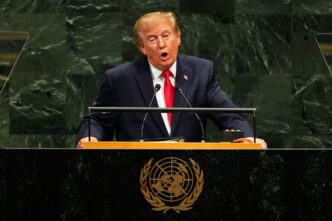
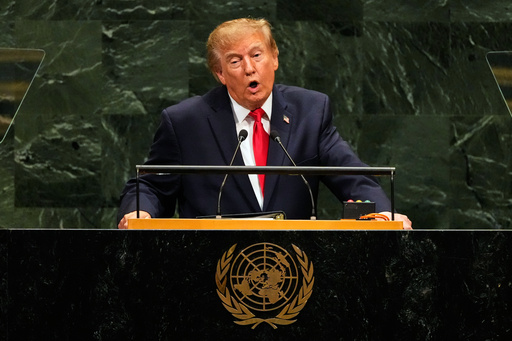
Moscow, Beijing and Washington all pose their own kind of challenges to the EU: hybrid attacks that officials across the EU blame on Russia; China's gargantuan trade imbalance and a near-monopoly over critical mineral supplies; and a Trump administration critical of European policies on defense, migration, and technology regulation.
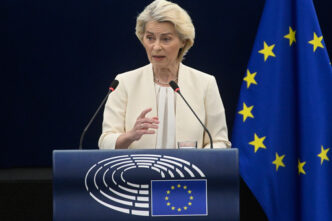
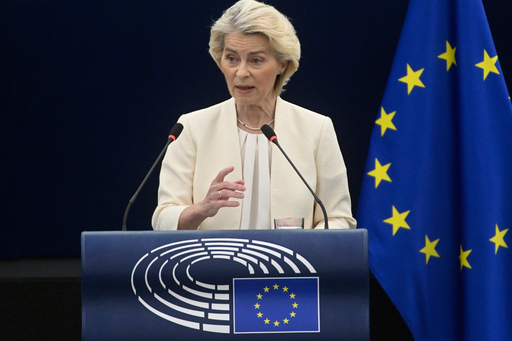
The EU deal with the Philippines roughly tracks with the “ middle powers ” strategy laid out at the World Economic Forum in Davos, Switzerland, earlier this year by Canadian Prime Minister Mark Carney. Last week, he was the guest of honor in the European Parliament in Strasbourg at the annual State of the European Union speech by European Commission President Ursula von der Leyen.
She said then that the EU would forge a new kind of “ associate membership ” for Canada.
“In this new world, we must urgently reimagine our partnerships,” von der Leyen said during her speech.
And at the same time, nations around the world have sought out the EU to weather “sudden changes very often on the fundamental principles of how trade is being done,” said Šefčovič, the trade negotiator.
“My phone was ringing all the time,” he said. “When the world goes in such turbulence and turmoil, you work closely with your friends and close partners."