

A new report on Charlie Kirk’s assassination says his Turning Point USA organization insisted he speak outdoors despite security concerns, while the university where he was killed didn’t properly assess dangers such as the possibility of a rooftop shooter.
Those were among the key findings in an after-action report released Friday by Utah Valley University. The external, independent review found that the university failed to conduct a formal security assessment, did not create a written event action plan and deferred critical decision making for the conservative activist’s talk to Turning Point USA.
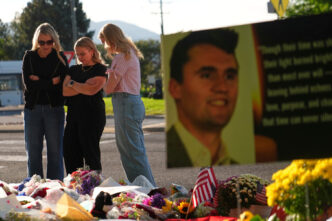
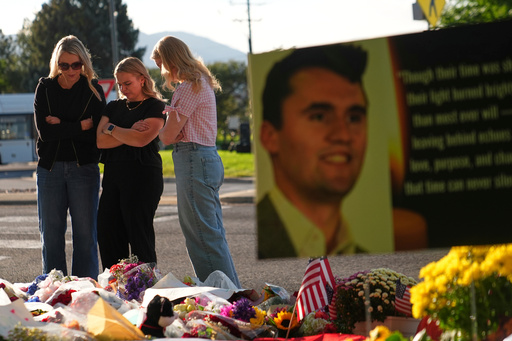
Kirk, 31, was killed on Sept. 10, 2025, by a sniper perched on a rooftop more than 400 feet (122 meters) away, authorities said. He had been debating students in an outdoor courtyard on the Orem, Utah, campus surrounded by tall buildings and elevated walkways, and with several thousand people in attendance.
The report makes nearly 150 recommendations, including hiring a police sergeant to focus on campus events and creating clear criteria for when events must be moved indoors or to more controllable venues because of crowd size and line-of-sight concerns.
In a statement, Utah Valley President Jon Anderson said the university has a responsibility to “learn from the findings of this review, and follow through on its recommendations.”
“This requires humility, an honest examination of our policies and practices, and a commitment to act on what we learn,” said Anderson, who took over as president last month. He added that the university has made “meaningful progress in strengthening campus safety over the past year.”
That includes hiring a chief public safety officer to coordinate with campus police and other emergency response agencies and hiring more campus police officers. At the time of the shooting, the university had just 13 sworn officers, which the report said was not sufficient for Utah Valley's size and the types of events and activities held on its campus. Utah Valley is the state's largest university, with about 50,000 students on a sprawling campus beneath the Wasatch Mountains.
Tyler Robinson has pleaded not guilty to aggravated murder in the shooting, a charge that could make him eligible for the death penalty if convicted. Prosecutors say he told his romantic partner that he “had enough of his (Kirk’s) hatred.” No trial date has been set.
Last week, Kirk’s family sent a wrongful death notice — a precursor to a possible lawsuit — accusing Utah Valley officials of hastening his death with a string of “reckless decisions.” They included failing to conduct an adequate risk assessment, failing to establish a secure perimeter and failing to have first responders immediately available, which led to Kirk being taken to a hospital in a private vehicle instead of an ambulance.
The family’s lawyer, Brett Parkinson, said in a statement that the report reaffirms those allegations. By hosting the event, he said, Utah Valley assumed responsibility for the safety of all in attendance, including Kirk.
“The buck stopped with UVU leadership and law enforcement,” Parkinson said. “Justice for Charlie and his family requires true accountability for UVU’s fatal shortcomings that day.”
According to the after-action report, a Turning Point representative insisted at an August 2025 planning meeting that Kirk speak at a courtyard on campus because he had been there previously and the organization was familiar with the location. Some Utah Valley officials expressed reservations about holding the event in an outdoor space with tall buildings around, but ultimately allowed the event to proceed.
“In our assessment, those decisions were consequential,” the report said.
The location “created significant protective operations considerations,” the report said, but the planning process failed to include a documented line-of-sight assessment, pre-event briefing or walk-through with security stakeholders. Nor was there clear coordination with the speaker’s private security team and external law enforcement partners, the report said.
An Associated Press review found that the campus did not use several public safety practices that have become standard at events around the country. Among other things, campus police did not fly a drone to monitor rooftops or coordinate with local law enforcement to secure the event attended by about 3,000 people. Nor were there bag checks or metal detectors.
___
Hannah Schoenbaum in Salt Lake City contributed to this report.