


By Bailey Coyle, FOX23.com News Staff
OKLAHOMA — Drivers across Oklahoma may occasionally notice black tubes stretched across roadways or small cameras mounted on signposts along highways. According to Cody Hamblin, Assistant State Traffic Engineer with the Oklahoma Department of Transportation (ODOT), these tools are part of a routine, statewide traffic data collection program designed to better understand how Oklahomans use their roads.
ODOT collects traffic data at roughly 19,000 locations statewide, using a combination of temporary road tubes, portable cameras, and permanent counting stations. The goal is simple: accurately measure how many vehicles—especially trucks—are traveling on Oklahoma’s roads and how traffic patterns are changing over time.
“This is part of a routine program that we do across the entire state,” Hamblin said. “More or less, the point is just to be collecting the volumes and get a good understanding of how many vehicles are traveling on our roadways.”
Depending on the location, ODOT uses different methods to collect traffic counts. On lower-speed or less congested roads, crews may install rubber tubes across the pavement. These tubes record each vehicle that passes over them and store the information in a counting device.
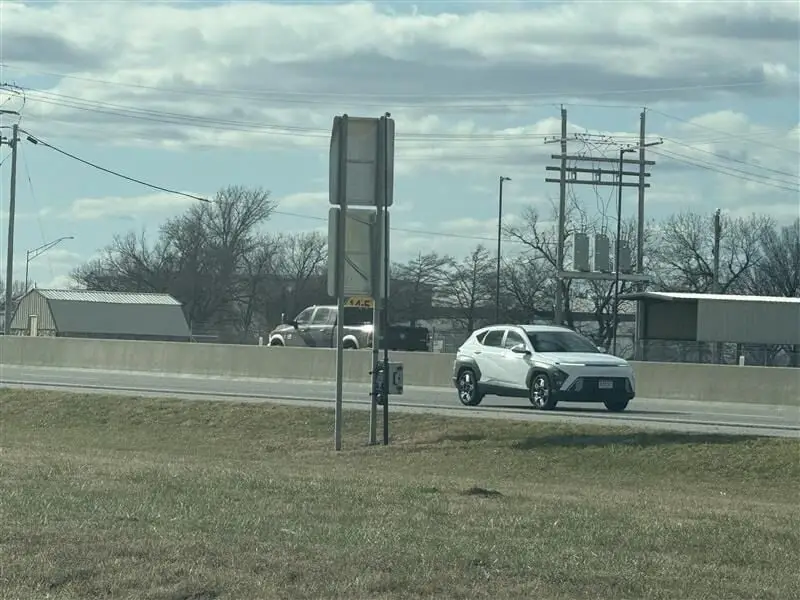
On higher-speed or heavily traveled corridors, ODOT often relies on cameras. These are mounted to existing signposts or poles and use video analytics to count vehicles and distinguish between cars and trucks. Using cameras also helps keep workers out of traffic, improving safety for ODOT crews.
Typically, each temporary count location is monitored for about 48 hours before the equipment is removed and the data is uploaded into ODOT’s database.
Traffic counts are not limited to busy highways. ODOT tracks traffic on every type of roadway, following a rotating three-year schedule. Each of the 19,000 sites across the state is counted once every three years, allowing engineers to compare data over time—such as counts from 2020, 2023, and now 2026.
This long-term approach helps ODOT answer critical questions: Are traffic volumes increasing? Are there more trucks on certain routes? Are roads approaching capacity?
The information collected plays a key role in transportation planning and design. Traffic volumes help determine whether a road may need additional lanes in the future, but they also directly influence engineering decisions.
“When we’re designing pavement, we need to know how thick it should be and what our bridge structures need to look like,” Hamblin explained. “Heavy vehicles put a lot of stress on roadways, so we want to make sure the pavement can withstand that use.”
In addition to temporary counts, ODOT operates 200 to 300 permanent traffic count stations across the state. These stations collect data 24/7 using radar technology to count vehicles, classify trucks, and measure speeds.
Keeping workers safe is a priority, which is why ODOT continues to expand its use of radar-based and camera systems instead of equipment that must be installed in the roadway.
All collected data undergoes regular quality control checks. ODOT is required to report this information to the federal government each year, ensuring accuracy and reliability.
Hamblin also emphasized that the program is not used to track individual drivers.
“This is not for tracking anything,” he said. “It’s simply for counting how many cars and trucks are on our roads so we can better plan for the future.”
From rural roads to major highways, ODOT’s traffic data collection program helps ensure Oklahoma’s infrastructure is designed to handle today’s traffic—and tomorrow’s growth—safely and efficiently.
By understanding how roads are used now, engineers can plan smarter, build stronger pavements, and keep the state moving for years to come.