

Pakistan's leaders sought Sunday to revive peace talks between the United States and Iran after President Donald Trump canceled plans for his top envoys to travel to Islamabad this weekend for negotiations.
Pakistan-led mediators are working to bridge significant gaps between the U.S. and Iran, according to a regional official involved in the mediation efforts who spoke on the condition of anonymity because they were not authorized to discuss the matter.
Iran still insists on ending the U.S. blockade on its ports before launching a new round of talks with the Trump administration, the official said.
Trump said he told his top envoys Steve Witkoff and Jared Kushner not to travel to Pakistan this weekend to negotiate with Iran.
“If they want to talk, all they have to do is call!!!” Trump said on social media.
Iran's President Masoud Pezeshkian told Pakistani Prime Minister Shehbaz Sharif during a phone call Saturday night that the U.S. “should first remove operational obstacles, including the blockade,” to allow a new round of negotiations, according to the ISNA and Tasnim news agencies in Iran.
As the U.S. enforces its blockade of Iranian ports, a standoff also remained on in the Strait of Hormuz, a vital global waterway through which one-fifth of the world’s oil typically travels, with Iran restricting movement through the key waterway.
Early on Monday, the U.S. military’s Central Command said it has so far turned around 38 ships during the blockade.
Here is the latest:
Oil prices rose when the market opened Sunday as traders absorbed the news that talks between the U.S. and Iran about a potential ceasefire have stalled again.
West Texas Intermediate, the U.S.-produced light, sweet crude, was selling for $96.50 a barrel Sunday, up 2% since the market closed on Friday. The price was 44% higher than before the start of the Iran war, when oil was selling for about $67 a barrel.
Brent crude, the international standard, was trading at $107.75 per barrel Sunday, up about 3% since Friday and 48% since the war began, when oil was selling for $72 a barrel.
Oil prices have risen steadily since the war began and tankers full of crude became stranded in Persian Gulf, unable to safely transit through the Strait of Hormuz, the narrow passage through which one-fifth of the world’s oil typically travels.
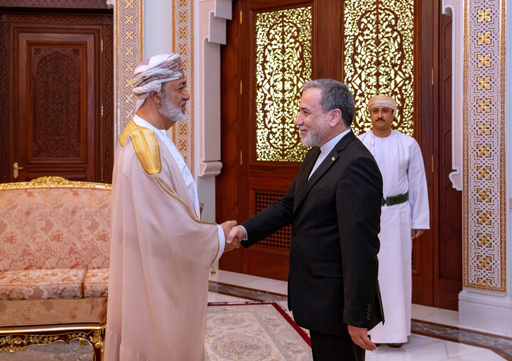
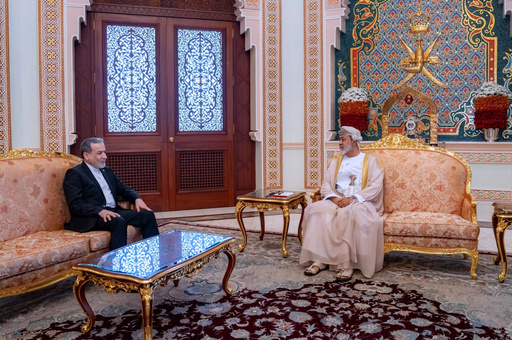
Abbas Araghchi made a brief visit to Islamabad a day after leaving the city and throwing the prospect of a second round of talks with the United States into question.
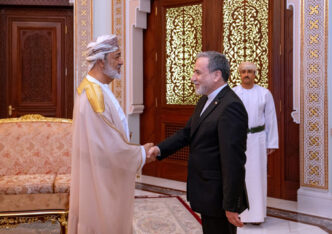
He had gone to Oman, located on the other side of the Strait of Hormuz, before his latest three-hour visit to Islamabad. He then left for Russia late Sunday.
The U.S. didn’t send envoys to Pakistan for a second round of talks, but Pakistan continues to mediate, and two officials there said indirect talks are still ongoing. They spoke on condition of anonymity because they were not authorized to speak to the media.
Araghchi’s low-profile visit contrasted with his earlier one, when he met with Pakistan’s military and political leaders and presented Tehran’s proposals to end conflict in the region.
Pakistan’s foreign minister, Ishaq Dar, said late Sunday that the government has lifted all restrictions around the high-security zone in the capital of Islamabad.
Iranian and U.S. delegations held rare face-to-face talks there earlier this month. The area had remained under lockdown for more than a week as Pakistan hoped to host a second round of talks aimed at securing a ceasefire.
Dar’s remarks signaled that there was no immediate prospect of further direct talks between the United States and Iran. Still, Pakistan’s government says it continues to mediate by conveying messages between the two sides to promote lasting stability in the region.
In a post on X, Dar thanked residents of Islamabad and the nearby city of Rawalpindi “for their patience and cooperation.”
In an interview Sunday on Fox News Channel, Trump said he made that decision rather than send a delegation on a 17-hour flight.
“We have all the cards. If they want to talk, they can come to us, or they can call us,” Trump said, not indicating when the call would take place.
Talks appeared to fall apart on Saturday, with Tehran’s top diplomat leaving Pakistan, and Trump soon afterward saying he had told envoys not to travel to Islamabad.
Asked about NATO, Trump said he was “very, very disappointed” in the military alliance, which he has suggested the U.S. may consider leaving after member countries ignored his call to help as Iran effectively shut the the Strait of Hormuz.
“We’ve been serving them for many years, spending trillions of dollars, and when we wanted to help they were not there, so we have to remember that,” Trump said.
The U.S. military’s Central Command said early Monday that it had turned around 38 ships so far during its blockade of Iran.
The Israeli military says it carried out artillery and airstrikes in southern Lebanon.
They targeted Hezbollah militants and weapons sites, including rocket launchers and storage facilities, north of what it calls the Forward Defense Line, as fighting has picked up in recent days despite a ceasefire.
The country’s health ministry added in figures released Sunday that 7,755 people were wounded in the latest Israel-Hezbollah war that broke out on March 2.
The war broke out after Hezbollah fired rockets at northern Israel two days after the U.S. and Israel attacked its main backer, Iran.
A 10-day ceasefire between Israel and Hezbollah went into effect on April 17. The ceasefire was extended by three weeks on Thursday.
The Iran-backed group on Sunday condemned Israeli Prime Minister Benjamin Netanyahu’s ceasefire remarks, in which he said Hezbollah’s actions are threatening the truce between Israel and Lebanon.
Hezbollah said its shelling of Israeli targets is “a legitimate response” to what it described as Israel’s violations of the ceasefire.
The group also criticized Lebanese authorities, saying they “have placed themselves in a dangerous predicament when they chose to be photographed in a disgraceful image alongside representatives of a usurping and illegitimate entity that violates its land and sovereignty and continues killing its people.”
The ceasefire between Israel and Lebanon was extended for three weeks, with Trump hosting talks flanked by Lebanese and Israeli ambassadors.
An 11-year-old Israeli girl who was critically wounded in an Iranian missile strike earlier this month has died of her injuries, according to Sheba Medical Center.
The girl had been hospitalized at Sheba since the attack. She died on Friday after several weeks in critical condition.
She was wounded when a missile struck a residential area in the central Israeli city of Bnei Brak on April 1 and had remained in critical condition for several weeks.
Her death raises Israel’s death toll from the war to 39.
Iran’s foreign minister arrived in Islamabad on Sunday after a visit to Oman, Pakistani officials said, as Islamabad steps up efforts to bring Tehran and Washington back to the negotiating table.
Abbas Araghchi will hold more talks with Pakistani officials during the visit and is expected to travel to Moscow afterward, two officials said, speaking on condition of anonymity because they were not authorized to brief the media on the record.
Iran’s top diplomat has briefed his Qatari counterpart about his country’s “latest initiatives and diplomatic efforts” to end the war in the Middle East.
Foreign Minister Abbas Araghchi spoke by phone Sunday with Qatar’s top diplomat, Sheikh Mohammed bin Abdulrahman Al Thani.
The two ministers affirmed the importance of diplomatic coordination to back peace efforts, Araghchi wrote in his channel on Telegram.
Egypt Foreign Minister Badr Abdelatty discussed efforts to relaunch negotiations between the United States and Iran with his Qatari and Iranian counterparts.
In separate calls with the ministers, Abdelatty affirmed the importance of the diplomatic path to ensure the continuation of the ceasefire in a way that leads to an end to the war.
Israeli President Isaac Herzog delayed a decision on a request by Prime Minister Benjamin Netanyahu to halt his corruption trial.
Herzog’s office said the president has stated “on several occasions” that a settlement between Netanyahu and prosecutors is the best way to resolve the case and this position hasn’t changed.
“The president therefore believes that before addressing the pardon request itself, efforts should first be exhausted to reach an agreement between the parties, outside the courtroom,” the office said.
The announcement marked a setback for Netanyahu, who faces new elections later this year. It also came despite multiple calls by Trump for Herzog to end the trial.
Netanyahu filed his request in November, saying that dropping corruption charges against him would help unify the country. His office did not immediately return a message seeking comment.
At least four Palestinians were killed by Israeli forces Sunday morning in the Gaza Strip, hospital authorities said.
Two men were killed when Israeli forces opened fire on a group of people in the Kuwait roundabout in southeastern Gaza City, according to Shifa hospital, which received the casualties.
Another man was shot and killed close to the Saqqa mosque in central Gaza, the hospital said.
Nasser hospital said a 40-year-old woman was shot and killed by Israeli forces close to the Turkish slaughterhouse in the southern part of Khan Younis city.
The Israeli military did not immediately respond to a request for comment.
The deaths were the latest among Palestinians in the coastal enclave since an October ceasefire deal attempted to halt more than two years of war between Israel and Hamas in Gaza.
While the heaviest fighting has subsided, Israeli forces have carried out repeated airstrikes and frequently fired on Palestinians near military-held zones.
At least 811 Palestinians have been killed including at least 226 children and 179 women, according to Gaza health officials.
Israel’s military on Sunday warned Lebanese living in seven southern towns to flee their homes ahead of strikes in the area.
Col. Avichay Adraea, a military spokesman, claimed without evidence that Hezbollah violated a ceasefire deal between Lebanon and Israel. He didn’t provide evidence.
Adraea said in a social media post that the military will operate in the area south of Zahrani river and ordered the residents to leave.
Israel previously issued a sweeping warning for people in southern Lebanon to flee their homes during its war against Hezbollah.
Syed Mohammad Ali, an independent political analyst in Pakistan, said indirect talks between the U.S. and Iran were progressing despite Trump’s decision not to send envoys to talks that had been set to begin this weekend.
“The delay in the second round of Islamabad talks must not be seen as a setback to ceasefire negotiations and peace efforts, which remain on track,” Ali told The Associated Press on Sunday.
Ali said ongoing tensions between Washington and Tehran cannot be eased overnight and the negotiation process “requires wisdom and patience from both sides.”
“This is a sensitive and complicated process, and there will be ups and downs, which are normal in such matters. But the good thing is that the ceasefire is holding, and both sides have a desire to end the conflict in a way that does not backfire at home,” Ali said.
Pakistan’s top political and military leadership is continuing to mediate between the United States and Iran, with indirect ceasefire talks still alive despite mounting tensions between the sides, two Pakistani officials said Sunday.
Iranian Foreign Minister Abbas Araghchi is expected to arrive in Pakistan’s capital Islamabad on Sunday evening for a second visit in as many days after a short trip to Oman.
Araghchi was in Islamabad on Saturday and presented Tehran’s position on ending the regional conflict to Pakistan Prime Minister Shehbaz Sharif, army chief Field Marshal Asim Munir, Foreign Minister Ishaq Dar and other senior officials.
There were no immediate plans for U.S. envoys to return for talks, according to the Pakistani officials, who spoke on condition of anonymity because they were not authorized to speak to the media.
Israeli Prime Minister Benjamin Netanyahu, a close Trump ally, said Sunday morning he was shocked by what he called an “attempted assassination” at an event attended by Trump.
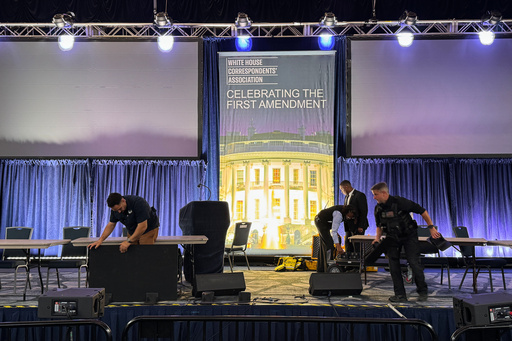
Trump was uninjured and rushed off the stage at the White House Correspondents Dinner on Saturday night after a man armed with guns and knives stormed the lobby outside the event in Washington.
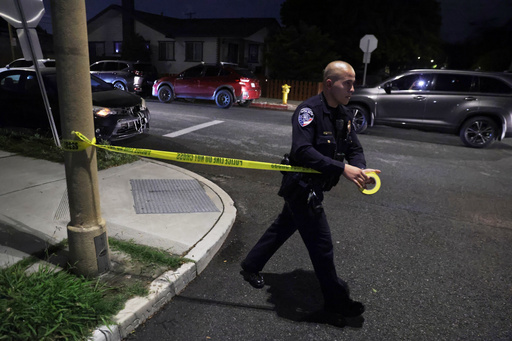
Police believe the man opened fire and acted alone but did not say who was his intended target or describe a motive. He was taken into custody.
One officer was shot in a bullet-resistant vest but was recovering, officials said.
“We send our wishes for a full and speedy recovery to the wounded police officer and salute the US Secret Service for their swift and decisive action,” Netanyahu wrote on X.
Life began returning to normal in Pakistan’s capital on Sunday morning.
Authorities in Islamabad eased near-lockdown measures imposed during a week of heightened security prior to planned ceasefire talks between the United States and Iran.
The restrictions enforced across Islamabad and the nearby garrison city of Rawalpindi disrupted daily life for hundreds of thousands. Commuters were forced to make long detours, traffic thinned along major arteries and parents struggled to reach schools.
By Sunday, barriers were being lifted and traffic was gradually building on the city’s main roads. Residents described a sense of relief after days of gridlock and uncertainty.
The government said in a social media post late Saturday that tourist destinations, parks and bus terminals were being reopened.
Security remained tight around the heavily guarded Red Zone, home to key government buildings and the site where U.S.-Iran talks were held earlier this month.
Iran on Sunday hanged a man who was convicted of carrying out terrorist activities in the southeastern province of Sistan and Baluchistan, state media reported.
Amer Ramesh was hanged after the country’s Supreme Court upheld a death sentence issued by a primary court, according to Iran’s judiciary news outlet, Mizanonline.
Mizanonline did not report where he was hanged or when and where he was arrested.
Mizanonline said Ramesh received training in a regional country and was a member of militant group Jaish al-Adl, which reportedly aims to achieve greater rights for people in the Baloch ethnic group.
Iran has executed other people over similar charges and in recent weeks has hanged more than a dozen people accused of terrorist activities.
Iran President Masoud Pezeshkian said his country won’t negotiate while the United States imposes a blockade on its ports, according to Iranian media.
Pezeshkian told Pakistani Prime Minister Shehbaz Sharif during a phone call Saturday night that the U.S. “should first remove operational obstacles, including the blockade,” to allow a new round of negotiations, the ISNA and Tasnim news agencies reported.
The Pakistani premier described the call as a “warm and constructive discussion.”
Iranian Foreign Minister Abbas Araghchi concluded a one-day trip to Pakistan’s capital Islamabad on Saturday after meeting with Pakistani military and government officials.
The trip did not produce a breakthrough in efforts to relaunch negotiations after Trump canceled a planned trip by his envoys to Islamabad.
Iran’s state-run IRNA news agency said Foreign Minister Abbas Araghchi will return to Pakistan after his current visit to Oman on his way to visiting Russia.
The report said he was expected to be back in Pakistan's capital Islamabad on Sunday and would join other members of his delegation who had gone to Tehran for consultations and “instructions on the topics related to the end of the war.”