


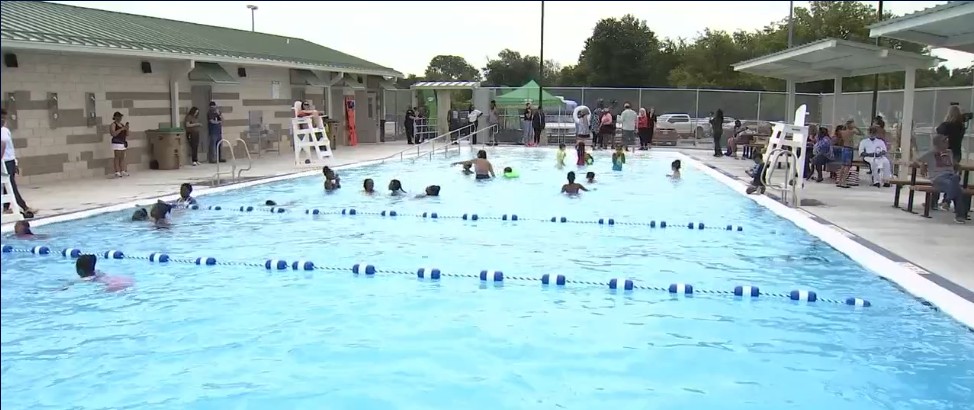
TULSA, Okla. — As Green Country families gear up for the holiday weekend, water safety is top of mind with area lakes and public pools officially opening for the summer. While Memorial Day weekend marks the unofficial kickoff to summer and draws thousands to the water, officials warn that those cherished seasonal traditions can turn tragic in the blink of an eye.
Drowning remains a leading cause of death for young children. To keep families safe, local medical and safety leaders are urging parents to practice critical safety protocols before anyone dives in.
The American Red Cross stresses that the first layer of protection must start on the shore. The organization is urging families to designate a completely distraction-free “water watcher” whenever children are near a pool, lake, or river.
“When we say a water watcher, we’re talking about an adult, and you can take shifts in this, but we’re talking about an adult that will spend 10, 15 minutes dedicated just to watching the people in the pool, or the lake, or the river,” Matt Trotter, Regional Communications Director for the Red Cross of Kansas and Oklahoma, said. “Put the distractions aside. Don’t check your phone.”
Because drowning is often silent and happens in seconds, visibility is another key element of water safety. Ascension St. John Pediatrician Dr. Courtney Sauls says a simple design choice, like the color of your child’s swimsuit, can radically change how fast they are spotted during a crisis.
Dr. Sauls recommends dressing children in bright, neon, and vibrant colors. She warns that light blues and whites completely blend into pool liners and murky Oklahoma lakes, making a struggling child incredibly difficult to see.
“Drowning might not always be really clear. It’s not going to have a lot of noise,” Dr. Sauls said. “So, really, watch for children that might be bobbing, might be gasping for air.”
According to Dr. Sauls, another major blind spot for families actually happens when the swimming pauses for a break.
“One of the dangerous times is when children are eating, you might take those flotation devices, those life jackets off to eat,” Dr. Sauls said. “And then jump right in the pool without getting it back on. So that’s gonna be an important thing to monitor for, especially around meal times.”
If a dangerous situation does arise and you see someone struggling in open water, the Red Cross says to remember the phrase: “Reach or throw, don’t go.” Bystanders should utilize a pole, tree branch, or life preserver to pull someone to safety rather than jumping into the water themselves, which risks creating a second victim.
For long-term prevention, Dr. Sauls notes that most children are physically ready to start formal swim lessons by age four. Experts say implementing these layers of safety can make all the difference in preventing a holiday weekend tragedy.
The American Red Cross offers a free youth water safety program called “Whale Tales,” which uses rhyming phrases and videos to teach kids important safety rules. Parents can access these resources directly on the Red Cross Water Safety for Kids website.
Additionally, broadcast resources and visual training guides can be found via the American Red Cross Training Services platform.