


WASHINGTON (AP) — South Carolina was selected Friday to once again lead off the Democratic Party’s 2028 presidential nominating schedule, cementing a dramatic break from decades of tradition by leaving Iowa out of the early-state lineup altogether and elevating more racially diverse states.
The decision by the Democratic National Committee’s Rules and Bylaws Committee will need to be approved by the full organization, which is scheduled to meet in August.
Nevada is expected to follow South Carolina, with New Hampshire, New Mexico, Michigan and Virginia rounding out the early-state calendar. Those states will wield outsized influence in the nominating contest before Super Tuesday, when voters across a large group of states cast presidential primary ballots.
“This calendar will battle test our candidates, ensure our nominee can appeal to broad swaths of the electorate and this calendar will allow voters, not money, but voters to be the ultimate decider,” DNC Chair Ken Martin said after the vote.
The overhaul reflects Democrats’ effort to give greater influence to states that better mirror the party’s diverse coalition, particularly Black and Latino voters, after years of a calendar led by Iowa and New Hampshire, two states with overwhelmingly white electorates.
But hopes of emerging from Friday’s meeting with a party unified around one map were dashed by anger from states that had previously led the process. Rita Hart, chair of the Iowa Democratic Party, said she was disappointed but not surprised by Friday’s calendar vote, which she called “very messy” and a sign that the national party is “out of touch with voters.”
There was more angst in New Hampshire, where the secretary of state is required by law to schedule its presidential primary at least seven days before any other state holds a similar contest, setting up a potential conflict with the DNC calendar.
“The Democratic National Committee’s decision today is wrong for Democrats, wrong for New Hampshire, and wrong for the country,” said a group of congressional leaders in New Hampshire, including Sens. Jeanne Shaheen and Maggie Hassan.
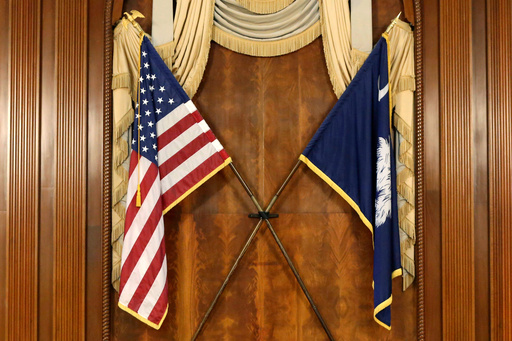
Democrats opted to lead with South Carolina after President Joe Biden successfully pushed to move the state to the front of Democrats’ 2024 calendar after the state revived his struggling 2020 presidential campaign. South Carolina has long been the first Southern contest and has served as a key test of candidates’ support among Black voters.
Jaime Harrison, a former DNC chair in attendance Friday, told The Associated Press after the vote that keeping his home state first on Democrats’ nominating calendar signaled to Black voters the value they bring to the party, especially after a Supreme Court decision aimed at weakening their voting power.
“I think we needed a strong statement to say to the most loyal members of our party, which are Black voters, that we’re going to stand up with you,” said Harrison, who also chaired South Carolina's Democratic Party. “It was just really important for us to stand up and say, ’We see you, we hear you, but most importantly, we’re gonna fight like hell for you. And your voices are important.'”
Much of Friday's debate stood as a contrast on several fronts. South Carolina proponents argued they had the experience to stand up a lead-off primary, and served as a showcase for the Black voters whose support has become vital for Democrats.
“Black voters didn't just show up for this party in 2020. They saved us,” Nebraska Democratic Party Chair Jane Kleeb said, in making her argument for South Carolina. "They saved our entire country from Donald Trump.”
Nevada's supporters, meanwhile, portrayed their state as the party's future, in which they argued Latino voters play a larger and larger role.
“We are the battleground state," said Artie Blanco of Nevada, a DNC vice chair. "We win elections because we leave no voter untouched.”
Republicans still need to do their calendar. They’re expected to stick with their traditional early-state lineup led off by Iowa and New Hampshire.
Iowa has long led both parties' calendars with caucuses. Hart declined to say whether Iowa Democrats will defy the national party in 2028. She said they will wait until after the state’s midterm races when Democrats hope to make recently unattainable gains in the increasingly conservative state.
“We’re going to win elections here, and then we’re going to tell them what we’re going to do,” said Scott Brennan, who formerly represented Iowa on the DNC’s Rules and Bylaws Committee.
New Hampshire Democrats similarly would not commit Friday to following the new calendar.
“This committee’s vote does not change the realities governing New Hampshire’s primary, which are beyond the control of both this committee and our state party,” said New Hampshire Democratic Party Chair Ray Buckley.
Asked about some states not committing to the new calendar, Martin said the party will “have to cross that bridge when we get there.”
“We got some time, and the calendar was just set here,” said Martin.
The new map will shape the opening stage of what is expected to be a crowded Democratic presidential primary. Without an incumbent or clear front-runner, the states that vote first could once again play an outsized role in determining which candidates gain momentum, attract donors and emerge as viable contenders.
The calendar decision is one of the first milestones in what's expected to be a tumultuous two-year sprint to the Democratic nomination.
There has not been a truly open Democratic presidential primary — without an incumbent president or a dominant front-runner — in almost two decades.
___
Holly Ramer in Concord, N.H., and Hannah Fingerhut in Des Moines, Iowa, contributed reporting.
___
Kinnard reported from Columbia, S.C., and can be reached at http://x.com/MegKinnardAP