

By Devyn Lyon, FOX23.com News Staff
INOLA, Okla. — An Inola rancher whose family has raised cattle in the area for generations traveled to Kentucky to collect environmental samples near an aluminum smelter as he searches for answers about what a proposed $4 billion aluminum project could mean for his livelihood.
Carl Day told FOX23 his family has owned property around Inola for more than 100 years.
Day said his cattle operation handles roughly 3,000 head throughout the year, representing millions of dollars invested in the cattle business.
With a massive aluminum smelter proposed for the Inola area, Day said assurances about the project’s safety were not enough for him.
“I decided I needed to get some answers for my business. I graze cattle on grass. We have—I’ll handle about 3,000 of them through the year and there’s a very large dollar amount standing around all the time.”
Day traveled with his wife to Kentucky in May and collected four sets of samples at varying distances from an aluminum smelter.
He said he intentionally chose some of those distances to mirror how far his own properties are from the proposed Inola site.
“I did that because I have properties two miles south of the smelter location and where we’re standing is about five miles north.”
Day provided FOX23 with the laboratory results and a separate written review of those results by an Oklahoma State University veterinary toxicologist.
Accurate Environmental Laboratories tested four soil samples and four grass samples for fluoride.
The four soil samples ranged from 1.79 to 13.3 milligrams of fluoride per kilogram, while the four grass samples ranged from 182 to 1,910 milligrams per kilogram.
A subsequent review by Oklahoma State University veterinary toxicologist Dr. Deon van der Merwe said the laboratory’s credentials appeared good and that the testing methods used were appropriate for the samples.
Van der Merwe cited a National Academies maximum tolerable dietary fluoride level of 40 milligrams per kilogram for growing beef calves.
The highest tested grass sample contained 1,910 milligrams per kilogram, approximately 48 times the level cited by the toxicologist.
Van der Merwe wrote that the grass concentrations were “not compatible with safe grazing of growing beef calves” if cattle were substantially consuming grass with similar fluoride concentrations.
Day said those results concern him because of how dependent his operation is on grazing.
“My whole livelihood revolves around cattle eating grass.”
However, there are significant limitations to what the testing can tell us.
The OSU toxicologist cautioned that he was unable to evaluate the sampling strategy in relation to how animals would actually graze in the affected areas.
Therefore, he evaluated the highest concentrations as a potential worst-case scenario and wrote that an accurate estimate of the risk would require “more extensive investigation and sampling.”
The review also does not establish that the Kentucky aluminum smelter caused the fluoride concentrations found in the samples.
Van der Merwe wrote that the disparity between the soil and grass concentrations suggests fluoride-containing particles settling on plant surfaces rather than uptake from the soil.
He listed several known potential sources of that type of contamination, including fertilizer production, mineral supplement production and metal processing, particularly steel and aluminum.
More extensive and controlled environmental sampling would be necessary to determine the actual risk and source.
Day said his concern ultimately goes beyond the individual test results.
“To me, this has always been a property rights issue. I’m not allowed to do something on my property that drifts over on my neighbor’s property and does damage.”
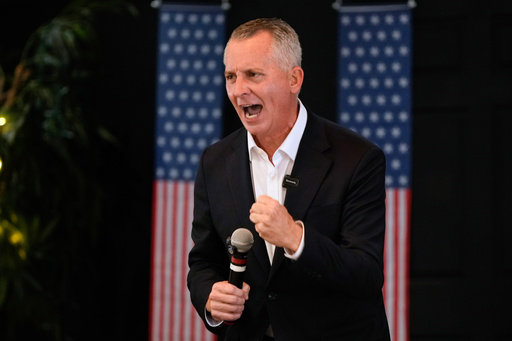
The findings come as State Rep. Tom Gann (R-Inola) continues pushing for the Oklahoma Legislature to publicly examine the proposed smelter.
Gann previously requested a legislative interim study focused on the project. He said House Speaker Kyle Hilbert rejected that request because the issue had already been discussed.
FOX23 has repeatedly reached out to Hilbert’s office for a response to Gann’s criticism.
Gann told FOX23 on Wednesday that the information surrounding the project has continued to develop since lawmakers previously considered it.
“I think there’s plenty of information that has not been vetted before it was even decided that we’re discovering now that should have been looked at before this was ever brought to a proposal to the House to even vote on,” Gann said.
Gann argued an interim study would give lawmakers an opportunity to publicly hear evidence and question experts without having to approve, reject or change the project’s permits.
“There’s plenty of information there that needs to be vetted, plenty of information that needs to be looked at further and more deeply on the type of effects it’s going to have to the people of Inola,” Gann said. “There’s absolutely no reason not to have a study on this at this point in time.”
Gann isn’t alone in calling for a legislative review.
FOX23 previously spoke with neighboring Inola property owners Steven Flathers and Bob Dailey, who have also called for lawmakers to examine the project.
“Whether this ends up becoming a good project or a bad project, it could be great and it could be totally safe,” Flathers previously told FOX23. “But I think the community around Inola is owed that answer directly and correctly.”
Dailey said he believes more information is available today than when lawmakers previously considered economic incentives connected to the project.
“Doing the study now gives an opportunity to say, ‘Here’s what we’ve learned in the last 18 months,’” Dailey said.
The calls for additional scrutiny come amid a new legal development.
On Tuesday, Oklahoma Attorney General Gentner Drummond filed a motion for a preliminary injunction asking a federal judge to block construction of the proposed smelter while his lawsuit challenging the project moves forward.
That does not mean construction has been permanently blocked; Drummond is asking the court to issue the injunction.
The attorney general initially filed his challenge to the project in June. His office says Emirates Global Aluminium holds a 60% controlling interest in the proposed Oklahoma Primary Aluminum facility, while Century Aluminum holds the remaining 40%.
Drummond has cited potential effects on agriculture and the environment among his arguments against the project.
Separate from the political debate and court fight, the Oklahoma Department of Environmental Quality is continuing its regulatory review.
DEQ is currently reviewing an air-quality construction permit application for the proposed facility. The agency says its job is to determine whether appropriate emissions-control technologies are included and whether the application meets regulatory requirements before making a permit decision.
The permit has not been approved.
DEQ placed the application into “Pending Facility Action” status in July while requesting additional information from Oklahoma Primary Aluminum. The agency requested supplemental information involving emissions calculations, pollution-control technology, modeling and fluoride, among other technical issues. The state’s permitting timeline is suspended while it waits for the requested information.
DEQ’s records show regulators have specifically asked the applicant to further justify its proposed fluoride-emissions controls and explain why higher reduction efficiencies demonstrated elsewhere could not be achieved at the Inola facility.
The company’s initial application estimated approximately 425 tons of fluoride emissions per year across the proposed facility, but final source-specific limits and the facility-wide total have not been established. DEQ has not made a final permit decision.
DEQ says the permitting process will include opportunities for public involvement, including public comment periods, meetings and potentially administrative hearings.
There are still significant questions that the Kentucky samples alone cannot answer — including the source of the fluoride measured in the grass and whether conditions surrounding that facility can tell us what environmental effects, if any, could occur around the proposed Inola smelter.
FOX23 is continuing to review the environmental records surrounding the Inola project, including the information Oklahoma regulators are requesting from the developer and what those responses could mean for the eventual permit decision.
We’ll also continue following Gann’s push for legislative scrutiny, the attorney general’s court challenge and the concerns of the people who live and raise livestock around the proposed site.
To review Oklahoma DEQ’s Inola aluminum smelter information and permitting process, click here.
The lab results from Day’s samples and Dr. Deon van der Merwe’s analysis of them can be read below. All redacted information in the documents is personal information of the individuals who filed and collected the samples.