

Janna Clark, FOX23 News
A driver who hit five cars and injured two people in downtown Tulsa pleaded guilty to a felony charge of driving under the influence, but his criminal record could eventually be cleared if he completes seven years of probation.
The case is raising questions about how Oklahoma’s new, tougher DUI law is being applied.
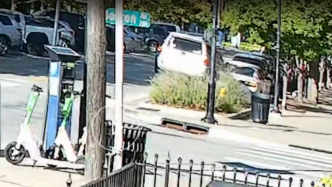
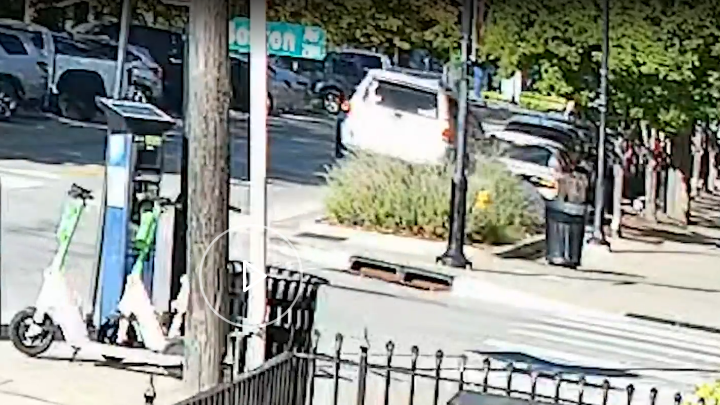
The crash happened on Aug. 1 in Tulsa’s Arts District near Boston Avenue and Reconciliation Way, in front of Guthrie Green near the Woody Guthrie Center.
Surveillance video captured a silver Toyota 4Runner striking a parked car before bouncing off another vehicle traveling in the opposite direction.
The SUV continued hitting cars for more than half a block before stopping near the Bob Dylan Center.
In all, the 4Runner hit five vehicles and injured two people who were inside their cars.
The SUV ended up stopping just short of hitting a sixth vehicle.
Brandon Helscel, who owns the nearby Classic Cigars and Lounge, said he had never witnessed anything like it in his three years in the area.
“There’s no excuse for getting in a vehicle like that and ping ponging on six cars like that,” Helscel said.
Tulsa police identified the driver as 29-year-old Brandon Hohengarten.
Officers said they found an empty BuzzBallz alcohol container in the SUV’s center console and discovered Hohengarten did not have insurance.
Police said Hohengarten struggled to stand during a field sobriety test and refused to take a breath test.
He told officers he had not been drinking, but when asked about why he was barefoot, officers said he told them he had left his shoes at a bar.
Oklahoma enacted a new DUI law earlier this year that expanded the definition of aggravated DUI.
Under the law, certain DUI offenses that previously could have been misdemeanors can be charged as felonies when aggravating circumstances, such as reckless driving or causing a crash, are involved.
FOX23 Investigative Reporter Janna Clark asked the Tulsa County District Attorney’s Office why Hohengarten’s DUI charge was initially filed as a misdemeanor.
After reviewing the case, the office changed the charge to a felony.
Tulsa County District Attorney Steve Kunzweiler said the police department initially submitted the case as a misdemeanor and did not reference the other circumstances surrounding the crash.
“My prosecutor should have caught that and so, thank you,” Kunzweiler told FOX23. “I’m glad that you guys picked up this particular aspect of the case. It’s an easy fix. This guy is now charged with a felony and he’s going to be dealt with accordingly.”
However, court records show Hohengarten pleaded guilty and the felony charges were deferred.
He also faced charges for driving without insurance and transporting an open container of alcohol.
In court documents, Hohengarten acknowledged driving in Tulsa County while too intoxicated to drive and causing an accident.
Under the terms of the deferred sentence, Hohengarten must pay $28 a month to the Tulsa County court system and participate in electronic monitoring.
If he meets the requirements of his sentence and does not get into further trouble, the charges could be expunged after seven years.
Court records list a date in September 2033 for the expungement.
The district attorney’s office said the punishment remains within the range allowed for a misdemeanor under state law, despite the felony charge.
The office said seven years is the longest probation period allowed under Oklahoma law.
Since Hohengarten had no criminal history, prosecutors decided that public safety would be best served by holding him accountable for the longest period possible while providing an opportunity for rehabilitation, the office said.
“When a defendant is willing to take accountability, undergo a rigorous probation and engage in meaningful rehabilitation, that strikes at the heart of the crime instead of just consequences,” the district attorney’s office said in a statement to FOX23.
Meanwhile, people whose vehicles were damaged in the crash are left dealing with repairs or replacement costs.
Helscel said the damage could have been much worse.
“He caused a lot of damage and even though someone didn’t die, it very easily could have been much worse.”