OMDURMAN, Sudan (AP) — For three years, Dr. Jamal Eltaeb made excruciating choices. Who should live and potentially die? Should he operate without the right medicines if it might save someone's life? How would he find fuel to keep the hospital's lights on?
As Sudan 's war raged around him, only one decision was easy: Keep working.
The orthopedic surgeon was leading Al Nao hospital in Omdurman, just outside the capital, Khartoum, as control of the urban area shifted between Sudan's army and paramilitary fighters. As the front line moved closer and the hospital overflowed with patients, some colleagues lost their nerve and left.
The soft-spoken Eltaeb was a rare surgeon who remained. Even as the hospital was bombed more than once. Even as most medical supplies ran out.
“I weighed the options of staying here, and taking care of your patients and helping other people that need you as a skilled surgeon, rather than choose your own safety,” he told The Associated Press in an interview.
He is one of countless Sudanese who have pitched in to help as the world largely looks elsewhere, distracted by conflicts in the Middle East and Ukraine. He has seen the bodies behind the estimates of tens of thousands of people killed, and what it means — day to excruciating day — when the United Nations warns his country's health system is near collapse.
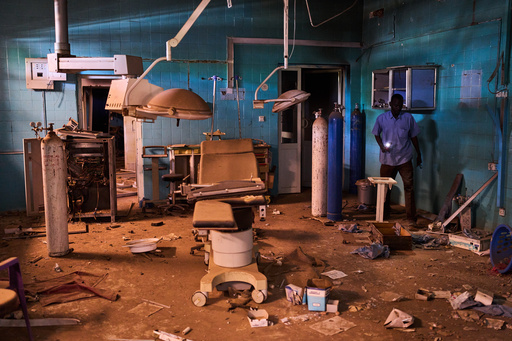
Nearly 40% of Sudan's hospitals no longer function. Many have been stripped for parts or used by armed groups as bases. Sudan’s army has since retaken the capital, and Al Nao remains one of the area's only functioning health centers.
Walking through the complex, the 54-year-old showed AP journalists the remnants of some of the hardest months of his life.
Over there was a window that was struck, killing the relative of a patient. And there in the courtyard was the last tent standing of the many erected during the peak of the conflict to accommodate mass casualties.
“We were working everywhere, in tents, outside, on the floor, doing everything to save patients’ lives,” he said.
The work earned Eltaeb the $1 million Aurora Prize for Awakening Humanity, which honors individuals who risk their lives to save others. He gave some of the money to medical and humanitarian groups around the world.
Before the war, staffers said, Al Nao was a quiet hospital with its nearly 100 beds empty much of the time. But when fighting began in Khartoum and the paramilitary Rapid Support Forces captured swaths of the city, patients hurried in.
Eltaeb's own hospital elsewhere closed shortly after the war began in April 2023, and he moved to Al Nao. By July, most of the staff had fled, leaving him in charge.
He and a handful of employees and volunteers struggled to keep the place running. Electricity was out for weeks as the facility relied on the army to supply fuel for generators. Medicines like antibiotics and painkillers ran out.
In August, a month after Eltaeb took charge, the hospital was hit for the first time.
“From that moment, we knew that we are a target … And from that time, they didn’t stop targeting us,” he said. The RSF later struck the hospital three more times.
Normality had crumbled. A father of three, Eltaeb sat in his office and handed out sweets to a steady stream of patients and staff vying for his attention.
Decisions were nearly impossible. On a particularly harrowing day in late 2024, he and his team scrambled to triage over 100 wounded people after a strike hit a nearby market. Eight of them died.
“You choose … as if you can choose who is going to live and who is going to die,” he said.
The day only got worse. Eltaeb had to decide whether to amputate on children without full anesthetic because they were bleeding heavily and he didn't have time to transport them to the operating room.
Using local anesthetic, he removed an arm and leg of a 9-year-old boy and a leg of his 11 year-old sister.
He now scrolls through photos of such surgeries on his phone, attempting to explain to the world a horror few can grasp.
A member of the military media accompanied the AP during the visit, including during interviews. The AP retains full editorial control of its content.
The hospital relied on volunteers to keep supplies coming. They would post what they needed on social media, and pharmacists would provide the keys for their long-closed shops and allow volunteers to take medicines and other items for free.
One volunteer, Nazar Mohamed, spent months riding around Omdurman, often on a bicycle, delivering supplies while explosions echoed.
Other donations came from organizations and individuals abroad. A network of Sudanese doctors overseas provided remote advice on coping with mass casualties or what to do when antibiotics or anesthesia ran low.
The hospital's remaining staffers got creative, making beds and crutches out of wood and using clothes instead of gauze for makeshift splints.
Fighting has shifted away from the Khartoum area. Some funding-strained organizations that supported Eltaeb's hospital now assist places more in need.
He said there is enough money until June to pay salaries and keep generators running, but they will need some $40,000 a month for the hospital to function.
While some countries have pledged support to help Sudan's reconstruction, there's concern the war with Iran might divert attention and resources, especially from Gulf countries who have vowed to help the country recover.
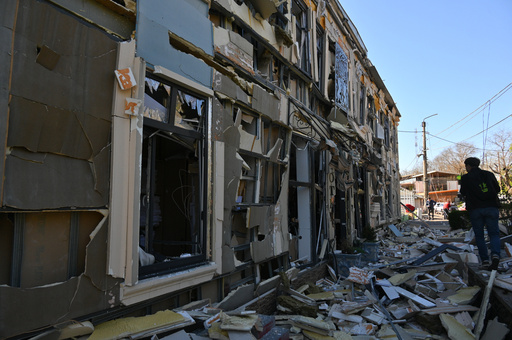
Hospitals that were hit harder than Al Nao lie in ruins and need much more.
Across town, Dr. Osman Ismail Osman, director of Al Shaabi hospital, said the several hundred thousand dollars the government has provided is a drop in the bucket.
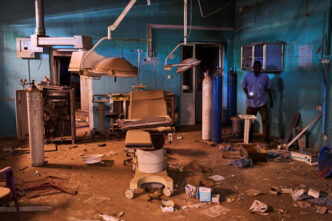
The RSF occupied his hospital during the war. Dusty, broken medical equipment worth millions of dollars is piled up, and chunks of concrete are scattered with metal beds.
The goal of opening the badly damaged hospital for emergency referrals within weeks is ambitious, but medical workers like Eltaeb have learned how to approach the impossible.
“I believe I did my best as a doctor as a Sudanese," the surgeon said.
___
For more on Africa and development: https://apnews.com/hub/africa-pulse
The Associated Press receives financial support for global health and development coverage in Africa from the Gates Foundation. The AP is solely responsible for all content. Find AP’s standards for working with philanthropies, a list of supporters and funded coverage areas at AP.org.