


By Paige Orr, Fox23 News
TULSA, Okla. — A new $1 billion federal extreme weather fund promises massive relief for local infrastructure, but strict new guidelines prioritizing “shovel-ready” developments are leaving smaller communities in Oklahoma struggling to compete.
Washington’s shift toward bypassing traditional project planning phases means applicant readiness dictates who secures funding, effectively pushing underfunded municipalities to the back of the line. The bottleneck highlights a growing divide between larger cities capable of funding years of upfront engineering and smaller towns locked out by red tape.
Allison Whitsitt, director of emergency management at the engineering firm WSB, helped secure that initial multi-million-dollar grant for Tulsa. She noted that while the influx of federal capital is vital, the administrative hurdles remain unchanged for lesser-funded areas.
“The burden on rural communities is still kind of the same,” Whitsitt said. “How do you come up with that match dollars? How do you come up with the money to fix those repetitive issues?”
Without permanent funding solutions, structural red tape frequently traps smaller municipalities in a cyclical loop of temporary repairs following severe storms.
“One thing I don’t think people realize is that when FEMA comes in after a disaster event, they pay to put things back exactly the way they were, no better, no less,” Whitsitt said. “And so if you keep putting a band-aid on the same problem, you’re gonna have the same problem.”
“Every grant that, especially we have with FEMA, you get ranked in terms of your information that you submit,” Smiley said. “So there’s like a matrix. If you’re 30% ready on your project, you get 5 points. But if you’re 90 or above, you get 30.”
Because towns lacking upfront capital for architectural blueprints and engineering assessments lose crucial points early, local coordinators are urging area leaders to alter their approach. To stand a chance against stricter federal metrics, communities must proactively document localized infrastructure failures long before funding cycles open.
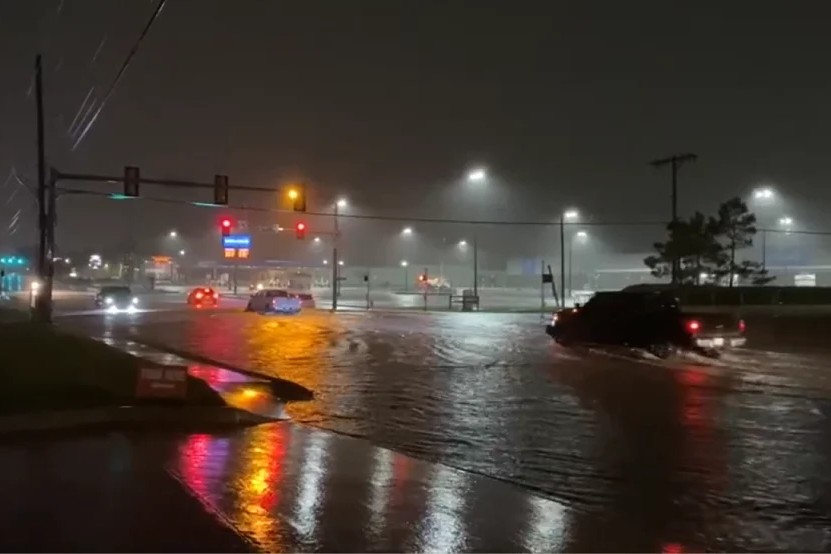
“We keep track typically of what’s going on during weather, and so where we have washouts of roads or water going over roads, we keep track, and we know where those are at,” Smiley said. “So when something like this comes out and we have the availability for grants for resilience, then we’re ready and willing, of course, to apply for those to help our local communities.”
As severe weather patterns continue to test regional infrastructure, emergency management coordinators emphasize that prioritizing localized data tracking is the clearest path for Green Country communities to secure future resilience funding. Local leaders are being reminded to identify high-risk drainage and transit zones immediately, ensuring the most dangerous areas receive priority when federal evaluations begin.