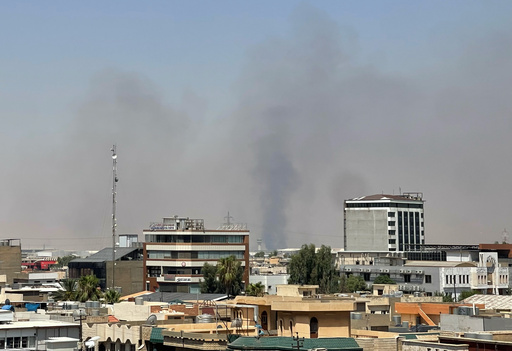


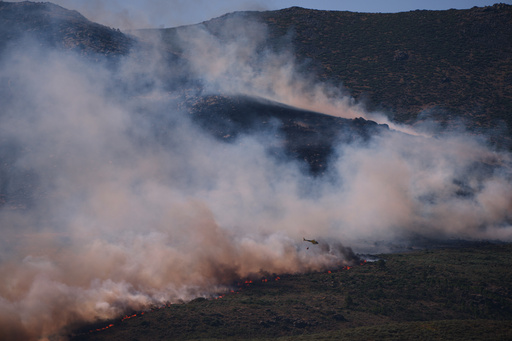
ARCACHON, France (AP) — Massive forest fires forced the evacuation of some 200,000 people in southwestern France and central Spain on Friday, with residents fleeing towns near Madrid and Bordeaux as the flames raged out of control.
Firefighters and authorities in both European countries were caught off guard by the virulence of the fires, which were fueled by high temperatures and the long-term effects of climate change. Firefighters in Spain admitted the fires were so fast and violent that they could not be tackled head on. Some people even fled by boat when flames swept through the touristic area on France’s Atlantic coast.
Some 141,000 fled homes in the Gironde and Landes departments in France, the French interior ministry said. In central Spain, 60,000 were forced from their homes, according to the Spanish interior ministry.
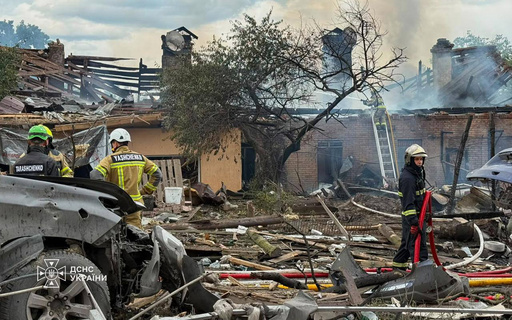
Dozens of French firefighters were injured, authorities said, but no deaths were reported in either country despite the scenes of panic as townsfolk fled by car and police went door to door to tell people to leave as large plumes of smoke rose from the neighboring woodlands.
France’s Interior minister Laurent Nunez said that the large wildfire that ravaged large swaths of land in southwestern France is heading toward the city of Bordeaux.
Speaking to French TV channel Tf1, Nunez said the wildfire that earlier in the day forced the evacuation of the Cap Ferret peninsula has swept across 140 square kilometers, with 110,000 people fleeing their homes in the Gironde region.
“We learned in the middle of the afternoon that, following the wind shift, it had become a large, self-sustaining fire that is extremely difficult to bring under control,” Nunez said. “It is now moving east, toward the Bordeaux metropolitan area. We are going to reorganize our response so we can fight it from the ground and prevent it from advancing toward Bordeaux.”
Meanwhile, French President Emmanuel Macron has asked the Prime Minister Sébastien Lecornu to activate the government’s crisis response unit, and has instructed the armed forces to mobilize in order to provide the maximum possible reinforcement to the civilian emergency services.
“This fire that we have been living with and fighting against here in Gironde for three days has reached an unprecedented magnitude," Sophie Brocas, the Nouvelle Aquitaine Prefect, said. “To combat it, we will receive extremely significant national reinforcements.”
The blaze started on Wednesday near Cap Ferret peninsula on France’s Atlantic coast, located 60 kilometers (37 miles) from Bordeaux. Local authorities in the Gironde department said 53 homes and a campsite were destroyed, adding that 42 firefighters were injured. Around 1,500 people who fled the peninsula arrived by sea in the city of Arcachon, some aboard small water taxis and others on larger boats.
“It’s quite impressive and even frightening," said Laurent Moretti, a resident in the town of Arès. “An evacuation on this scale has never happened before. All we really hope is that the firefighters can quickly get it under control.”
A separate wildfire broke out in Landes, causing 31,000 evacuations. Authorities believe the causes of both fires in France were accidental.
More than 20,000 people had already been evacuated from towns and vacation resorts on Thursday, but that number exploded on Friday as both France and Spain asked fellow European Union members for help.
Macron said France will receive EU reinforcements including two Croatian Canadair firefighting aircraft, two Portuguese Air Tractor aircraft, and two heavy-lift Black Hawk helicopters from the Czech Republic and Slovakia. Spanish Interior Minister Fernando Grande-Marlaska said that Italy and Greece are each sending two Canadair water-dumping airplanes, while a thousand Spanish soldiers helped firefighting efforts.
In Spain, the government declared a national emergency for wildfires for the first time as the blazes in Madrid and the nearby province of Ávila prompted the evacuation of some 60,000 people from towns west of the capital.
“I want to send a message of support to the thousands of families who face a difficult night ahead,” Spanish Prime Minister Pedro Sánchez, who will visit the fire-ravaged area on Saturday, wrote on X.
The fires are being fanned by a heat wave with temperatures expected to top 39 degrees Celsius (102 Fahrenheit).
Two major fires near Madrid merged into one single blaze that had quickly charred 30 square kilometers (11.5 square miles) by Friday afternoon. Regional President Isabel Díaz-Ayuso called it the worst in Madrid's history.
Francisco Martín, the central government representative for the region of Madrid, said that another 20,000 people had been ordered to shelter at home. Martín said more evacuations could be coming and that the priority now was to protect the town of San Lorenzo, the home of the Escorial, Philip II's 16th-century royal palace and monastery.
Meanwhile, a blaze in Ávila, less than two hours northwest of Madrid, consumed 90 square kilometers (34 square miles). Spain's Civil Guard arrested one man and is investigating another for allegedly having used heavy machinery in an area where it was prohibited for fire risk. Police believe a spark ignited the fire on Thursday.
“All around the town was smoke and fire, I was scared. Everything was fire and smoke, people were nervous,” 33-year-old Joaquin Espinosa said before he and his neighbors were evacuated from the village of Chapinería.
In one week, Spain has had the worst fires on record for both the regions of Castilla La Mancha and Madrid.
Firefighters were still trying to extinguish Spain’s second-largest ever fire in the Guadalajara province of Castilla La Mancha after it had destroyed some 320 square kilometers (120 square miles) over the last week. Thirteen people were also killed in a fire in southern Spain earlier this month, the deadliest fire in recent memory for Spain.
Spanish Minister for the Ecological Transition Sara Aagesen said that Spain has seen 1,140 square kilometers (440 square miles) already burned this year, more than five times the burned terrain it had through the first half of 2025.
Spain has experienced record temperatures in recent summers and forest fires of increasing violence.
Wildfire analyst Raúl Quílez said that besides the impact of climate change, Spain’s rural areas have become more exposed to fires with the abandonment of farmlands that traditionally provided buffer zones around villages. Now, he said, trees and undergrowth often reach right to homes, putting them in harm’s way.
"That makes a perfect cocktail for this type of fires,” Quílez told The Associated Press by phone from Valencia, where he works as an analyst for regional firefighters.
___
Alicia León in Chapinería, Spain, contributed to this story. Petrequin reported from Paris. Wilson reported from Barcelona, Spain.