

Yemeni authorities said six people were killed by Iran-backed Houthi rebels attacking a vessel in the Bab el-Mandeb strait, while U.S. forces fired on a ship they said was trying to break a blockade of Iran's ports.
Here’s a look at the latest developments in the Iran war and the wider Middle East. Full coverage can be found here.
Six people were killed Tuesday by Houthis firing missiles on a vessel in the Bab el-Mandeb strait, Yemeni authorities said.
Yemen's coast guard said the dead included four crew members and two members of the government-allied National Resistance Forces. Houthis fired three ballistic missiles at the Yemeni commercial vessel, according to the Transportation Ministry of Yemen’s internationally recognized government.
They are the first known deaths from Houthi attacks on shipping off Yemen in the latest bout of fighting in the Arab country.
With the Strait of Hormuz effectively shut down by Iran, there has been a renewed focus on the Red Sea and Bab el-Mandeb strait at Yemen’s southern tip, which is an alternate route for Saudi Arabia to ship its oil.
The deadly vessel strike came amid Houthi attacks on the government-held port city of Mokha on the Red Sea and other areas of the country. Dozens of government troops and civilians have been killed in attacks since last week, according to the Yemeni military.
The strikes are part of an escalation by the Houthis against government forces in Yemen and oil facilities in neighboring Saudi Arabia, which supports the Yemeni government, and the kingdom’s shipping in the Red Sea.
The Houthi attacks could reignite Yemen’s civil war following a 2022 truce, and open a new front in the Middle East war.
Mohammed Abdul-Salam, the Houthis’ chief negotiator and spokesperson, accused Saudi Arabia in a social media post of exploiting the ceasefire to tighten an air and sea blockade it imposed in 2015.
He said the Houthis are open for negotiations but any settlement must include lifting the blockade.
The U.S. military said Tuesday that its forces fired on a Panamanian-flagged ship in the Gulf of Oman that tried to evade the American blockade on Iranian ports. The move came as U.S. President Donald Trump tries to keep economic pressure on the Islamic Republic.
U.S. Central Command said the vessel had ignored warnings to stop, prompting an American helicopter to fire missiles into the engine room of the M/V Vela Nova, disabling the ship. The statement did not say whether the ship’s crew suffered any casualties.
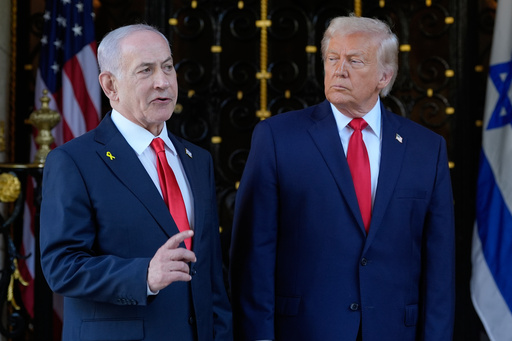
Trump on Tuesday night insisted that the U.S. military has “total control” over the Strait of Hormuz, despite the fact that Iran has kept up its attacks on ships in the waterway, largely impeding traffic there.
“Iran is going fine, going just absolutely fine,” he told reporters after a trip to Ohio. “We totally control the Strait of Hormuz. We have control over it. Nobody else. Only us,” Trump said.
Central Command said it has redirected 55 commercial vessels attempting to run the blockade, disabled three noncompliant vessels and boarded two. The U.S. Navy currently has more than 15 warships, including two aircraft carriers and an amphibious assault ship, stationed in the waters of the Arabian Sea.
Iran has refused to back down on demands that the U.S. end its blockade of Iranian ports, lift sanctions on the Islamic Republic and fulfill other conditions.
Iran effectively closed the strait after Israel and the U.S. attacked the country on Feb. 28. Attacks on the key waterway — through which roughly one-fifth of the world’s traded oil supplies passed before the war — and uncertainty around its future have kept energy prices a major focus of U.S. politics ahead of November’s midterm elections.
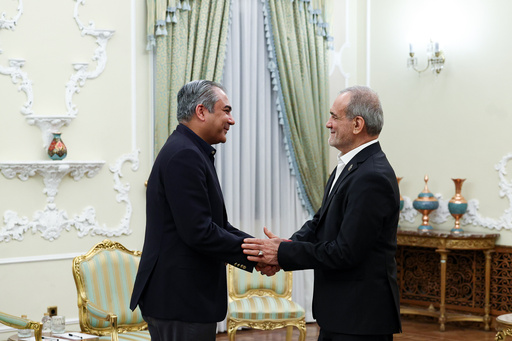
Pakistani Interior Minister Mohsin Naqvi traveled Tuesday to Tehran for meetings with Iran's foreign minister and other officials.
Naqvi's visit aimed to encourage Iran to resume negotiations with the United States under an interim peace deal brokered by Pakistan in June, two officials said. They spoke on condition of anonymity because they were not authorized to speak to the media.
Iranian Foreign Minister Abbas Araghchi posted photos from his meeting with Naqvi on his private Telegram channel.
It is Naqvi's sixth trip to Iran as part of Pakistan’s diplomatic efforts to ease tensions between Iran and the U.S.
—Munir Ahmed in Islamabad
Five European nations on the Security Council called a meeting Tuesday as Britain’s new U.N. Ambassador Sarah MacIntosh condemned escalating violence across the West Bank, calling settler attacks on Palestinian villages, some alongside Israeli soldiers, “appalling.”
Palestinian U.N. Ambassador Riyad Mansour said Israeli annexation of Palestinian territory is already “underway — brutally and relentlessly.” He urged international action to chart a path for Palestinian self-determination and “freedom.”
Israeli U.N. Ambassador Danny Danon responded by saying: “Israel condemns all violence against Israelis and Palestinians” and “does not tolerate extremism — we confront it.”
Danon said “extremist attacks" by Israelis are declining and accused council members of ignoring “rising” attacks by Palestinians.
In Syria, a court sentenced former President Bashar Assad along with his younger brother to death for crimes against humanity and war crimes during Syria’s 14-year conflict that left about half a million people dead.
Assad and his brother Maher, who fled to Russia after insurgents marched into Damascus in December 2024, were sentenced in absentia at the Fourth Criminal Court in the Syrian capital.
___
This story has been corrected to state that Bashar and Maher Assad fled to Russia in 2024, not 2014.