

By Bailey Coyle, FOX23.com News Staff
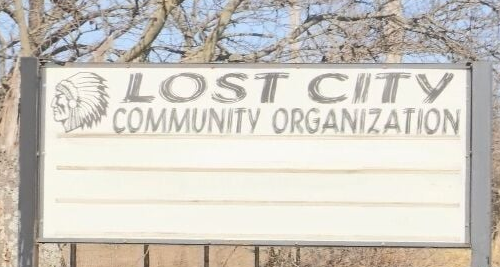
LOST CITY, Okla. — For generations of families, Lost City School was more than a place to learn. It was home.
Opened in the early 1900s, the rural school served students from kindergarten through eighth grade for more than a century, educating generations of Cherokee families and acting as the heart of the Lost City community. When the school closed in 2008 due to lack of funding, the building — and much of the community life tied to it — went quiet.
Now, the Cherokee Nation is working to change that.
The Nation recently acquired the former school property and plans to invest nearly $3 million into revitalizing the area, with a focus on housing and a community center. Leaders say the goal is to restore what the school once represented: a place where people come together.
“Lost City was a rural school, but more importantly, Lost City is a community,” said Cherokee Nation Principal Chief Chuck Hoskin Jr. “The school itself holds a special place in the hearts and minds of the people who live there.”
“It’s just home”
For former student Lacey Graalfs, that connection runs deep.
“My great-grandparents went to school there. My grandparents went there. My mom went there. My siblings and I went there,” Graalfs said. “It’s just home.”
Graalfs attended Lost City School in the late 1980s and early 1990s and now lives just a few roads away from the building. Her mother worked at the school’s Head Start program for decades, and Graalfs herself became a teacher — inspired by the educators who shaped her childhood.
The school, she says, functioned like an extended family.
“We were a really tight-knit community. It was more like family,” she said. “Teachers would take me home to my grandma’s. It wasn’t a big deal.”
Beyond traditional classes, Graalfs remembers learning Cherokee language, sign language, shop skills, and art — lessons that still influence her life today.
“I still paint, and I use techniques my art teacher taught me back then,” she said. “I tell my students now that we’re a school family. We take care of each other.”
When Lost City School closed in 2008, Graalfs was pregnant with her son and finishing college. She had planned to return to teach at the school that helped shape her.
“I was devastated,” she said. “I was more sad that my kids wouldn’t get to experience what I did.”
The school had long served as a community hub — hosting bingo nights, pie suppers, holiday programs, summer school, and free meals for families. Its closure left a void many say has never fully been filled.
That’s why Graalfs is now involved in community discussions about the property’s future. She says she was initially nervous about what might happen to the land, but feels encouraged by the Cherokee Nation’s commitment to listening to residents.
“I’m glad they’re using surveys from the people in the community,” she said.
Her hope is to see the site once again bring people together — especially elders.
“I’d love a community center where elders can come in, have coffee, talk, and share stories,” she said. “Just a place to connect.”
She also hopes a historic WPA-era stone building on the property can be preserved, possibly as a museum to honor Lost City’s history as a Cherokee community.
Chief Hoskin says honoring that history is a priority.
“We understand that connection,” he said. “It’s something that’s deep in people’s hearts and minds.”
The investment is part of the Cherokee Nation’s broader strategy to strengthen rural and underinvested communities through its Public Health and Wellness Fund. Hoskin says housing and community spaces are essential to improving quality of life.
“Housing is a public health need,” he said. “Community buildings lift people up. They give kids a reason to believe their community has a future.”
Hoskin emphasized that the project will be shaped alongside residents, with additional community meetings planned.
“What we want people to know is there’s a bright future,” he said. “It’s rooted in community, as it always has been. The most important ingredient is the people of Lost City.”
For Graalfs, that future feels personal.
“This place shaped who I am — as a mom, as a teacher, as a person,” she said. “No matter what happens, it will always feel like home.”