

HAVANA (AP) — Yuneisy Riviaux grew up in a working-class Havana neighborhood and has endured a life of hardship, but she never imagined a day would come when she and her little girls would go without lunch.
The 42-year-old unemployed mother of two lives in Havana with several other families in a house where the second floor collapsed years ago.
“Things have been going very, very badly for me,” Riviaux said as she played with her 2-year-old daughter, Seinet. “Some days I manage to get food.”
“But other times I can’t — like right now, when I have to bite my lip and swallow my tears because I don’t have lunch for the girls.”
The deepening economic crisis that has gripped Cuba for the past six years — intensified by the energy embargo enacted under U.S. President Donald Trump — continues to disproportionately affect the island’s most vulnerable. Persistent blackouts, cuts to the state-run food ration system, and severe shortages of water and medicine have transformed daily life into an ordeal for people like Riviaux, her husband Cristóbal Estrada and their two daughters.
A few hours earlier, the 61-year-old Estrada had made breakfast for 7-year-old Edianet: a piece of bread, distributed to all Cubans through the ration book system, with a tiny pat of butter — a luxury a tourist gave the family while wandering through the neighborhood.
After dropping Edianet off at school, Estrada set out for Cotorro, about 12 miles (20 kilometers) away, to get food and money relatives there had offered. During the last nationwide blackout on March 21, all the food his family had in their refrigerator spoiled.
“He has to see if he can find a ride, a bus or whatever it takes to get there,” Riviaux said.
Public transportation in Cuba has been semi-paralyzed because of gasoline shortages since the United States imposed an oil embargo on the island following the January attack on Venezuela — a key oil supplier that stopped making shipments to the island, which produces barely 40% of the crude oil it needs.
That led to islandwide blackouts that have roiled Cubans, who have grappled with years of crisis; the lack of gasoline and basic resources has crippled hospitals and led to soaring prices and food shortages.
For years, Mexico also sent oil to Cuba as the island struggled with a decades-long energy crisis, but it halted the shipments under the threat of U.S. tariffs, and now only sends humanitarian aid.
On Tuesday, a Russian tanker docked at the Cuban port of Matanzas with 730,000 barrels of oil after the Trump administration let it proceed despite the U.S. energy blockade — marking the first time in three months that an oil delivery reached the island. But that will provide only enough diesel for about nine or 10 days of the island's needs, experts say.
Riviaux and Estrada used to have a small stall outside their house where they sold powdered drinks and simple packaged foods.
But in February, Estrada fell ill and was hospitalized with a collapsed lung. The cost of his treatment was devastating; the couple was forced to spend their savings on medicine bought on the black market because state-subsidized pharmacies had none.
“We had to sacrifice that business to buy the medicine and save his life,” Riviaux said.
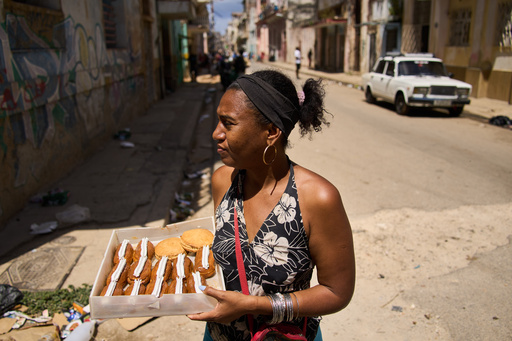
Now Riviaux sells sweet pastries her sister bakes whenever they can get a bag of flour — which isn't provided by the meager monthly rations, which include rice, beans, sugar, cooking oil, coffee and a daily bread roll.
Cuba's once-lauded universal health care system has so deteriorated that it struggles to provide basic care. Hospitals face a critical backlog, with some 96,000 surgeries pending, including 11,000 for children, according to local authorities and the United Nations.
Nearly 5 million people with chronic illnesses lack access to essential medications, while life-saving treatments like radiation treatments for cancer and dialysis for kidney disease have been interrupted for 16,000 and 2,800 patients, respectively.
The United Nations launched a $94 million emergency plan this week to support what it called a “life-threatening” crisis for Cubans. According to Francisco Pichón, resident coordinator of the U.N. in Cuba, the appeal comes after a long history of Cuba leading Latin America in maternal health and vaccination rates — successes now at grave risk.
By midday, her husband still hadn’t returned, so Riviaux had no choice but to give her 2-year-old a piece of bread and the last of the family's milk — a donation from Mexico. Riviaux herself went without. Her 7-year-old still gets a free lunch at school, where classes continue despite the national crisis.
Riviaux speaks with nostalgia about the time before the COVID-19 pandemic, when, she said, “Cuba had everything.”
“I know the pandemic hit the whole world, but it hit us much harder,” she said.
The ration book each family received before the pandemic contained rice, beans, a liter of milk daily for children, sugar, oil, chicken and ground meat, among some 30 food items and hygiene products. It was only enough to last about 20 days, so families supplemented with purchases in privately run stores using a currency pegged to the U.S. dollar.
Stricter U.S. sanctions, which began under the first Trump administration, along with a collapse in tourism triggered by the pandemic and Cuba’s failed economic policies, led to a deep recession.
Cuba’s gross domestic product has plummeted by 15% over the last six years, triggering a historic exodus. The island lost more than 1 million inhabitants — roughly 10% of its population — in 2024 alone.
Emboldened by the U.S. capture of Venezuelan President Nicolás Maduro, Trump has gradually escalated his rhetoric on Cuba, first suggesting he would pursue “a friendly takeover” of the country and more recently telling conservative allies from Latin America that he would “take care” of Cuba once the war with Iran winds down.
Riviaux admitted that while she tries to stay out of politics, the harshness of Trump’s rhetoric has left her deeply unsettled.
“We heard the news that Trump wanted to take over. What will happen if the U.S. gets involved?” she asked as her husband arrived late in the afternoon.
He brought plantains, chicken and enough cash to secure a kilo (about 2 pounds) of rice from a neighbor’s stall — a small relief in an uncertain week.
___
Associated Press journalist Milexsy Durán in Havana contributed to this report.
___
Follow AP’s coverage of Latin America and the Caribbean at https://apnews.com/hub/latin-america