By Bailey Coyle, FOX23.com News Staff
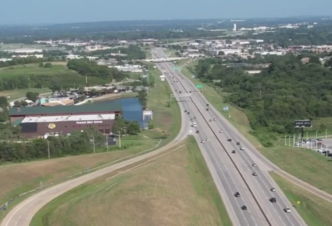
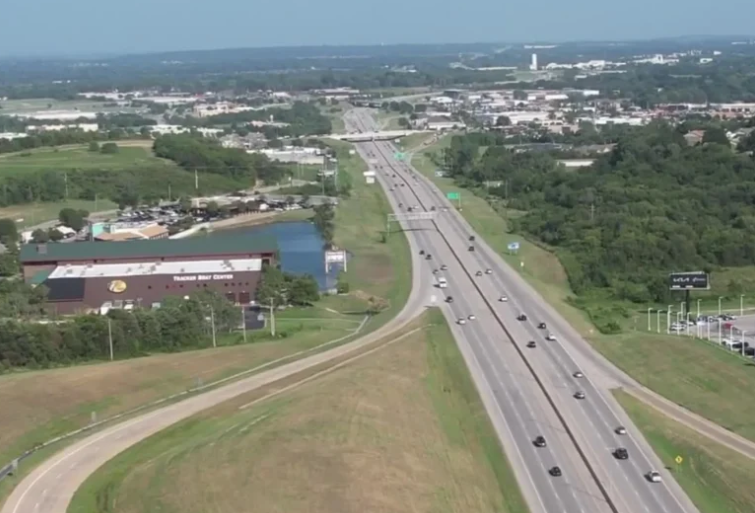
BROKEN ARROW, Okla. — The City of Broken Arrow is moving into the next phase of its “Reconnecting Broken Arrow” project, a long term effort city leaders say is designed to improve traffic flow, safety and connectivity around the Broken Arrow Expressway.
City officials recently wrapped up the public comment portion of the planning process and said the feedback gathered from residents will help shape the next phase of design work.
Charlie Bright, the Director of Engineering and Construction for the City of Broken Arrow, said the city was awarded a federal RAISE grant several years ago to begin studying improvements around the expressway.
“We were fortunate a few years ago to be awarded the RAISE grant from the federal government,” said Bright. “The intent of this project was to reconnect communities that are dissected by state highways or interstate highways.”
According to Bright, the project is focused on improving all forms of transportation around the Broken Arrow Expressway on the west side of the city.
“It is really multimodal. Roads, but it’s sidewalks for pedestrians, bicyclists and roadways.”
Bright said one of the biggest issues is the limited number of safe crossings for pedestrians and bicyclists trying to get across the expressway.
“It is really hard for a pedestrian or bicyclist to get across the Broken Arrow Expressway. There’s only a few spots you can do it and in those spots it’s not even extremely safe because the sidewalk might be right along the intersection or interchange going over the highway.”
He said many people avoid crossing the expressway altogether because of safety concerns.
“At the end of the day, if you’re walking or riding a bike, you avoid going across, so one of the goals is reconnecting it from that perspective.”
The project also focuses heavily on vehicle traffic.
Bright said limited crossings across the expressway create congestion at major interchanges like Elm Place and Lynn Lane.
“If I’m going from South BA to north BA, there’s only a few spots I can cross. Those spots become choke points for the community.”
Bright said many of the bridges and interchanges were designed 30 to 40 years ago, long before current traffic levels.
“Traffic counts were a lot lower back then than what they are today. This whole thing is about improving the corridors around the Broken Arrow Expressway and ultimately adapting to what our traffic counts are today and what they’re going to be in the future.”
As part of the federal grant process, the city was required to gather public input through meetings and online comments.
Bright said while the city received fewer than 10 formal comments, that is not unusual for large infrastructure projects.
“The comments that we’ve gotten have been focused around sidewalk connectivity and safety. Usually that comes from people that are runners or more likely to be pedestrians.”
Bright said the city plans to use those comments as officials move into the next phase of planning and design.
“We take all those comments serious and make sure we look at the areas we got those comments.”
He also believes the lack of comments sends a message from residents.
“I think the lack of comments really say the public as a whole, they’re not worried about the details. At the end of the day, they want to get through that area faster and they want to get through there safer.”
Bright said the current federal grant only covers planning and design work up to 60% completion.
The city hopes to finish that design work by 2027 before applying for another federal grant to help pay for construction.
“Our goal is to have all the design that’s part of this grant completed by 2027 and then we will go out for a new application in 2028 and hopefully the federal government will then support us in doing construction.”
The city is also partnering with the Oklahoma Department of Transportation (ODOT) on the project.
Bright said while the city studies roads and connections around the expressway, ODOT is also evaluating possible highway widening and interchange improvements.
“We’re actually doing this in partnership with ODOT, re-looking at the whole highway coming through Broken Arrow.”
Bright said projects of this scale are expensive and difficult for cities to fund on their own, which is why federal support is critical.
“Projects of this scale, when you talk about this many corridors and this size, they’re expensive. It’s hard for a city like Broken Arrow to be able to afford those on their own.”
While city leaders said they are excited about the project’s potential impact, they stress construction is still years away.
“We don’t expect to be in construction this year, next year, anything like that. Best case scenario, we’re talking about a five-to-eight year window before you actually see construction out there.”
Even so, Bright believes the long term payoff could be significant for Broken Arrow residents and businesses.
“I think you’re only going to see traffic counts get higher, you’re going to see businesses do better and you’re going to see people want to come into Broken Arrow even more from that direction.”
To learn more about the Reconnecting Broken Arrow project, click here.